
The UQ Doctor of Dental Medicine course
What you actually study, and where you will be
UQ Doctor of Dental Medicine's DMD is a 3.5-year (graduate entry) course with an integrated curriculum, with patient treatment from Year 2 and placements in Herston, Brisbane, and regional and community clinics across Queensland (2027 entry). UQ's Doctor of Dental Medicine, which started in 2024, is a compressed, graduate-entry dental degree based at the Oral Health Centre in Herston, Brisbane. Year 1 is dental science, simulation on manikin heads and practice on classmates. You begin treating patients in the summer semester that opens Year 2, and your last two semesters are placements in clinics across Queensland.
- Degree
- DMD
- Length
- 3.5 years (graduate entry)
- Teaching
- Integrated
- First patients
- Year 2
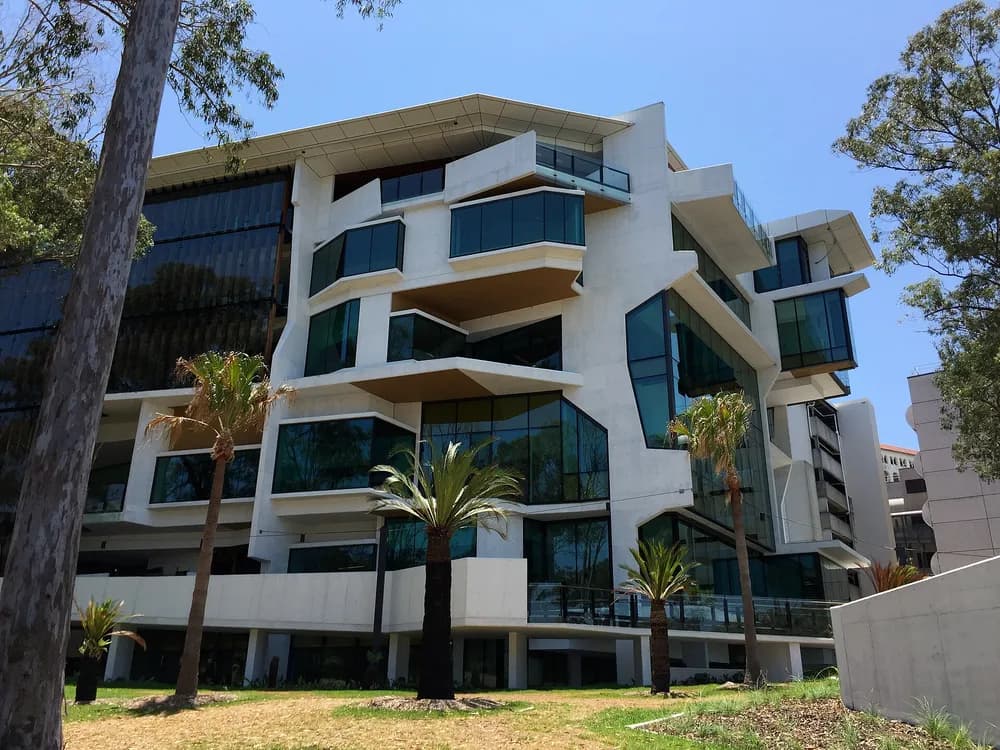

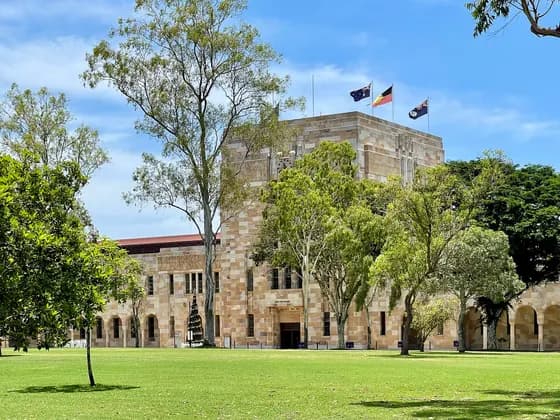
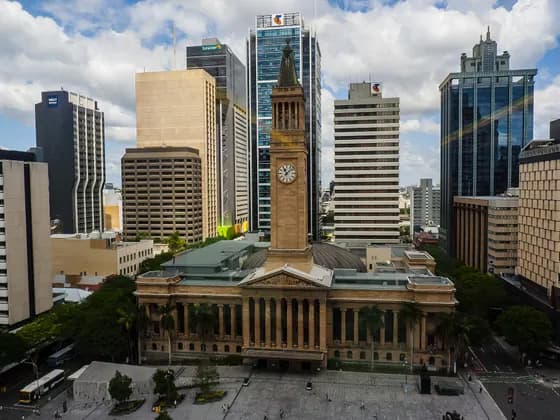
Photo: Kgbo · CC BY-SA 4.0 · cropped
Photo: Kgbo · CC BY-SA 4.0 · Photo: Kgbo · CC BY-SA 4.0 · Photo: John Robert McPherson · CC BY-SA 4.0
The UQ Doctor of Dental Medicine course at a glance (2027 entry)
The Doctor of Dental Medicine (DMD) is the University of Queensland's graduate-entry dental degree: you need a bachelor's degree before you start. It takes 3.5 years full time and qualifies you to apply for registration as a dentist. Despite the word Doctor, it is a masters-level degree, at level 9 of the Australian Qualifications Framework (AQF). Teaching is based at the UQ Oral Health Centre on the Herston campus in Brisbane.
It is a young course. According to the Australian Dental Council (ADC), which accredits dental courses, UQ set it up to help meet a shortage of dentists in Queensland. The first students started in January 2024 and finish their last semester in June 2027, so nobody has graduated yet. The ADC has granted initial accreditation, with conditions, until 31 December 2030.
The ADC describes the DMD as compressed compared with UQ's five-year Bachelor of Dental Science (Honours). Its calendar includes summer teaching at the start of Years 1 and 2, and in 2026 both Year 3 semesters had 19 teaching weeks. Every subject is compulsory (UQ calls subjects courses), so there are no electives.
Year 1 has no patients: you learn on phantom heads (manikin heads used to practise procedures), model teeth and classmates, and through virtual patient cases. You start treating patients in the summer semester that opens Year 2, then spend the rest of Year 2 and the first half of Year 3 in patient clinics at Herston. The final two semesters are placements in clinics around Queensland, while your team completes a research project.
| Degree | DMD (Doctor of Dental Medicine), a masters-level AQF 9 degree |
|---|---|
| Course length | 3.5 years full time, starting in early January |
| Entry pathway | Graduate entry: you need a bachelor's degree first |
| Class size | 30 places in the first (2024) intake; UQ expected to keep that number |
| Main campus | UQ Oral Health Centre, Herston campus, Brisbane |
| Teaching style | Lectures, workshops, simulation and peer clinic, then supervised patient clinics |
| First patients treated | Year 2 summer semester, from around mid-December |
| Supervised clinical hours | About 2,000, from your second year |
| Placement area | Herston, then clinics around Queensland in the last two semesters |
| Accreditation | ADC initial accreditation to 31 December 2030, with conditions |
What makes the UQ Doctor of Dental Medicine course different
A 3.5-year course with summer semesters
Summer teaching opens Years 1 and 2, starting with a January science block, and Year 4 is a single semester that ends in June.
Public dental clinics in your teaching building
Most clinics in the Oral Health Centre are run by Metro North Hospital and Health Service under the Oral Health Alliance between UQ and Queensland Health. UQ students give most of the treatment there, under supervision. You also treat patients at the UQ Herston Dental Clinic, the School's own teaching clinic in the same building.
Final placements in clinics around Queensland
Your last two semesters are placements in clinics such as regional government dental clinics, Community Controlled Health Services, which are run by the communities they serve, and Oral Health Centre clinics. In 2025 the ADC noted that final-year placements include regional placements and a recently completed paediatric clinic.
A team research project with a public conference
Research is a compulsory strand of the course. After learning to appraise studies in Year 1, you plan a project with your team and a supervisor in Year 3. You carry it out during the placement semesters and present it to your cohort and members of the public at a research conference.
How UQ Doctor of Dental Medicine teaches dentistry
Year 1 runs two strands side by side. The science subjects cover the cells and organ systems behind oral health, head and neck anatomy, microbiology and immunology, and an introduction to the dental specialties. The clinical foundation subjects cover infection control, examination, prevention and simple fillings, and are designed to connect that science to clinical work.
From the Year 2 summer semester until the placements, each semester is built around a pair of clinical subjects. The Clinical Dentistry subjects develop general practice care for adults, from prevention and gum treatment to fillings, extractions and care planning for patients with more complex needs. The Advanced Clinical Dentistry subjects cover the specialist disciplines, such as endodontics (root canal treatment), prosthodontics (crowns and dentures), orthodontics (straightening teeth), and paediatric and implant dentistry. On placement, learning comes from treating allocated patients, supported by recorded online sessions on choosing and planning cases.
Two smaller strands run alongside. Population Oral Health and Professional Dental Practice, in Year 2, cover public health, cultural safety, ethics, law and regulation. Interprofessional modules in Years 1 and 2 put you in small teams with other health students. In Year 1 these come from audiology, dietetics, nursing, occupational therapy, physiotherapy, psychology, social work and speech pathology. In 2025 the ADC noted that interprofessional practice is taught as modules and encouraged UQ to add chances to practise it in clinical settings.
The ways you will learn
| Lectures, workshops and tutorials | Carry the science and theory behind each clinical subject, with case-based discussions in several subjects and tutorials that apply what you learn to patient scenarios. |
|---|---|
| Pre-clinic simulation | Sessions on phantom heads in the pre-clinical laboratories. You start with cavity preparations in practice blocks and model teeth, then move on to crowns, root canal treatment and children's crowns before doing them on patients. |
| Peer clinic | Weekly Year 1 sessions where classmates act as each other's patients. You practise infection control, examinations, gum screening and hand scaling, and pass two competencies there: giving local anaesthetic, and taking x-rays on Dexter, a training manikin. |
| Virtual patients | Simulated patient cases that you work through from your first semester; in 2026 both of the first semester's reflective essays were based on them. |
| Supervised patient clinics | Morning or afternoon sessions treating patients at Herston under registered dentists and specialists, each rated by your clinical educator. |
| Placements | Your last two semesters in several clinics, where the subject coordinator periodically audits your work. |
A typical week on the UQ Doctor of Dental Medicine course
Full attendance is expected, and after the January block nearly all teaching is face to face at Herston. In Year 1, Semester 1, UQ's catalogue lists two hours of workshops and two of tutorials a week for Foundations of Dental Science. Molecular Biosciences for Dentistry has two hours each of lectures and tutorials, and Foundations of Clinical Dentistry I adds two hours of clinical coaching and practical classes of three and six hours.
The 2026 outline for Foundations of Clinical Dentistry II sets out the core of a Semester 2 week: three pre-clinic sessions, two lectures, one peer clinic session and one tutorial. Advanced Dental Science adds weekly seminars and simulation lab sessions, and Research Informed Practice I adds lectures and tutorials.
From the summer semester, clinic sessions fill mornings or afternoons around lectures, pre-clinic and workshops. In 2026, for example, Clinical Dentistry IB held pre-clinic sessions on Thursday mornings, 9am to 12pm, and afternoons, 1pm to 4pm. UQ's catalogue lists about 9 clinical hours a week in the summer semester, 18 in Year 2 Semester 1 and 12 in Semester 2. It lists 9 in Year 3 Semester 1, rising to 28 on placement.
In the placement semesters you are on placement about four days a week, with hours that vary between clinics. The ADC reports that students also have a day a week for the research project.
How anatomy is taught at UQ Doctor of Dental Medicine
Head and neck anatomy is a Year 1 subject area. In Semester 1, Foundations of Dental Science covers the anatomy, histology (tissue structure under the microscope) and embryology (development before birth) of the head, neck and mouth. It also covers the salivary glands, tooth development and eruption, and the anatomy of baby and adult teeth. In the 2026 outline, tooth anatomy has its own exam, which may ask you to identify extracted natural teeth.
In the 2026 outline, anatomy is examined in a two-hour practical test worth 30 percent of that subject. It covers the bones, muscles, nerves and vessels of the head and neck and the structure of the mouth. It is a hurdle, meaning a must-pass item: you need 50 percent, with one resit capped at 50 percent. You use this anatomy again in Year 1's local anaesthetic competency.
When you start treating patients at UQ Doctor of Dental Medicine
Year 1 prepares you for patients through pre-clinic simulation and weekly peer clinics with classmates. Late in Semester 2 you must pass competencies in giving local anaesthetic and taking dental x-rays, and a case-based viva, an oral exam on a written case.
Even simulated work in the clinics counts as clinical placement, so UQ's placement rules apply from the start, beginning with your immunisation record. Before the summer clinics you also need a Working with Children Check (Queensland's blue card), a National Police Certificate, first aid and CPR certificates, and the faculty's placement preparation module.
Patients arrive in week 3 of the summer semester, around mid-December, at the UQ Herston Dental Clinic. You start with healthy adults: examination, diagnosis of common conditions, prevention, simple gum treatment, small fillings and reading x-rays. The ADC reported in 2025 that staff triage patients and allocate them according to each student's skill level.
Responsibility builds each semester. In Year 2 the specialist subjects move you into the public clinics at the Oral Health Centre, and you add dentures, simple extractions and patients with moderately complex needs. In Year 3, back at the UQ Herston Dental Clinic, you add implant dentistry and children, whom you may treat only after passing the paediatric simulation test.
In the final two semesters you give comprehensive care to allocated patients on placement. Throughout, clinical educators mark you against where you should be at your stage of the course, not against a qualified dentist.
Year by year at UQ Doctor of Dental Medicine
- Year 1
Dental science, simulation and peer clinic
Year 1 starts in early January with a science block, then a compulsory orientation week in mid-February. Semesters 1 and 2 at Herston combine dental science with clinical foundations; there are no patients yet. Subjects are measured in units; the whole course is 64 units.
- DENT7001 Applied Biological Foundations for Dentistry (2 units, January): cells, organ systems, physiology and drugs as they apply to the mouth (online for intakes to date; listed as in person for January 2028). In January 2026 it was assessed by two quizzes and a critical essay.
- DENT7101 Foundations of Dental Science (2 units, Semester 1): head and neck anatomy, histology, embryology and tooth anatomy, assessed in 2026 by a tooth anatomy exam, the practical anatomy test and a final exam.
- DENT7102 Molecular Biosciences for Dentistry (2 units, Semester 1): microbiology and immunology for dentistry, from the microbes of the mouth to infection control; the 2026 final exam needed 60 percent to pass.
- DENT7111 Foundations of Clinical Dentistry I (4 units, Semester 1): infection control, ergonomics, patient interviews, oral examination, prevention, scaling and your first cavity preparation. The 2026 assessments included a pre-clinic skills test, two reflections, an Objective Structured Clinical Examination (OSCE, a practical exam in timed stations) and a final exam.
- DENT7103 Advanced Dental Science (2 units, Semester 2): an introduction to the dental specialties, with 2026 station exams on removable prosthodontics (dentures) and periodontal (gum) therapy.
- DENT7112 Foundations of Clinical Dentistry II (4 units, Semester 2): minimal intervention dentistry, which aims to prevent disease and remove as little tooth as possible. The 2026 assessments include practical exams on fillings for the five standard cavity types and the local anaesthetic, x-ray and viva hurdles.
- DENT7121 Research Informed Practice I (2 units, Semester 2): research methods, statistics and critical appraisal, plus an interprofessional teamwork module.
- Year 2: summer semester
Your first patients
The summer semester begins around the start of December, about ten days after Year 1 exams. UQ's 2026 calendar shows four teaching weeks in December, a break over Christmas and New Year, four more weeks in January, then exams in February. UQ's program rules count its two subjects toward Year 1; the School's study plan puts them at the start of Year 2.
- DENT7211 Clinical Dentistry IA (2 units): care for healthy adults, covering examination, diagnosis of common conditions, prevention, simple gum treatment, small fillings and x-ray interpretation.
- DENT7212 Advanced Clinical Dentistry IA (4 units): medical conditions that affect dental care, pharmacology, medical emergencies, root canal treatment and more complex fillings, practised first in pre-clinic.
- In Summer Semester 2025 (December 2025 to February 2026), assessments included a periodontal materials practical, an endodontic access practical, a medical emergencies exam and a complex restorative practical. You also start your Clinical Practice Portfolio, a rated record of every clinic session.
- Year 2
Specialist disciplines and more complex patients
Year 2 has two semesters of patient clinics, each pairing a general practice subject with a specialist subject, plus Population Oral Health and Professional Dental Practice. Semester 1 starts in mid to late February. In 2026, the Semester 2 clinical subjects started in early July and ran for 16 weeks, ending with exams in November. Semester dates can change from year to year.
- DENT7214 Clinical Dentistry IB (4 units, Semester 1): general practice care for adults, adding removable dentures and simple extractions. In 2026 it included pre-clinic root canal treatment on a front and a back tooth and a case presentation on a patient you have seen.
- DENT7213 Advanced Clinical Dentistry IB (2 units, Semester 1): specialist care in the Oral Health Centre patient clinics, with 2026 assessments on a full crown preparation and an orthodontics station exam.
- DENT7221 Population Oral Health (2 units, Semester 1): dental public health, the Australian oral health system, social conditions that shape oral health, Aboriginal and Torres Strait Islander health, cultural safety and health promotion.
- DENT7215 Clinical Dentistry IIA (2 units, Semester 2): care for adults with moderately complex needs, covering dental radiology, special needs dentistry, oral surgery, periodontics and oral medicine. Its 2026 assessments included a viva on a case record.
- DENT7216 Advanced Clinical Dentistry IIA (4 units, Semester 2): prosthodontics, endodontics and orthodontics in the Oral Health Centre patient clinics. Its 2026 assessments included a crown test and a portfolio of all your root canal cases.
- DENT7222 Professional Dental Practice (2 units, Semester 2): ethics, consent, negligence, regulation by the Australian Health Practitioner Regulation Agency (Ahpra) and the Dental Board of Australia, and dentistry as a business.
- Year 3, Semester 1
Complex adult care, children and a research proposal
Year 3 starts in mid-January with a long clinical semester (19 teaching weeks in 2026), followed by exams in June. You provide more comprehensive care for adults, begin treating children and plan a research project with your team.
- DENT7316 Clinical Dentistry IIB (2 units): comprehensive care for adults with moderately complex needs, including oral surgery and dental radiology. In 2026 it included a must-pass periodontal case presentation on a patient you have treated.
- DENT7317 Advanced Clinical Dentistry IIB (4 units): prosthodontics, endodontics, paediatric and implant dentistry at the UQ Herston Dental Clinic. The 2026 assessments include preparing a tooth for an onlay (a partial crown), the paediatric crown test (pass mark 60 percent) and an endodontic case portfolio.
- DENT7321 Research Informed Practice II (2 units): your team's research proposal, written with an appointed supervisor.
- Year 3, Semester 2
First placement semester
In 2026 this semester started in early July: up to 19 weeks on placement with a one-week break, followed by a workshop week. You rotate through several clinics while your team starts its research project.
- DENT7318 Advanced Clinical Dentistry IIIA (6 units): general dental practice in several clinics.
- You record every morning and afternoon session in an electronic logbook signed off by a supervisor, and write a weekly reflection on a case.
- Assessment in 2026: a Final Clinical Competence Assessment based on that logbook and your reflections, a case-based oral exam (60 percent) and an OSCE (40 percent), all must-pass.
- DENT7322 Research Informed Practice III (4 units over this semester and the next) begins.
- Year 4
Second placement and the finished project
Year 4 is a single semester. You complete a second placement in the same kinds of clinics and finish the research project, which completes the course.
- DENT7411 Advanced Clinical Dentistry IIIB (6 units): hours and arrangements vary with each placement's operations. Its catalogue page lists assignments, clinical assessments, an OSCE and oral examinations.
- DENT7322 finishes with the team's journal-style report and the research presentations.
- For the first cohort, this semester runs from 11 January to 12 June 2027, with research presentations on 17 June 2027.
How you are assessed at UQ Doctor of Dental Medicine
UQ grades each subject on a seven-point scale, where 4 is a pass and needs at least 50 percent. Most DMD subjects also have hurdles. Failing a hurdle means failing the subject, even with an overall mark of 50 percent or more. You must pass every subject in a year before moving on.
End-of-semester written exams are sat in person and invigilated, with multiple-choice, short-answer, problem-solving and case-scenario questions. Practical skills are tested under exam conditions in pre-clinic: fillings in Year 1, then crowns, root canal treatment and, in Year 3, a stainless steel crown for a child's tooth.
Station exams test skills against the clock. In an OSCE you rotate through stations that each test one task. UQ's MSATs (Multiple Station Assessment Tasks) work similarly, for areas such as orthodontics and periodontics. In vivas and case presentations, you talk examiners through a case from diagnosis to treatment plan.
Every clinical semester has a Clinical Practice Portfolio. After each session with a patient, your clinical educator rates you as Expectations Not Met, Developing, Expectations Met or Above Expectations. Fitness to practise, meaning safe and professional conduct, is also checked, and failing it turns that session into Expectations Not Met. You add case tallies and reflections at mid-semester and at the end.
In most clinical subject outlines, a passing portfolio needs an average of at least 2.5 out of 4, about 63 percent, and three or more Expectations Not Met ratings mean a fail. Because the skills build over a semester, the portfolio has no supplementary assessment or resit.
The placement semesters end with the course's final clinical assessments. In 2026 the first placement subject's OSCE was built around the ADC's competencies for newly qualified dentists, with tasks that can include writing a prescription, giving local anaesthetic and mock extractions on manikins.
- Resits: in the 2026 outlines, many failed practical hurdles can be resat once, capped at the pass mark, usually 50 percent. The cap is 60 percent for the Clinical Dentistry IB root canal test and the Year 3 paediatric test. Some practical tests, such as the crown preparation in Advanced Clinical Dentistry IB (Year 2, Semester 1), have no resit.
- Attendance: at least 90 percent of pre-clinic, peer clinic and workshop sessions, and of clinical sessions, rising to 95 percent of clinical sessions in your last two semesters. Missing too many can mean a make-up week of clinic in the break, an extra assessment task or a fail.
- The case-based oral exam in the first placement semester is taken before two examiners and uses a patient you managed in Year 3's first semester whose care involved at least three dental disciplines.
- Weights come from the 2026 course profiles, UQ's subject outlines; the summer subjects' profiles are for Summer Semester 2025. Details may change for later intakes.
- External examiners: the ADC has asked UQ to show, by 31 January 2027, its plans for external examiners to assess final-year students. The first cohort's final placement exams fall in late 2026 and the first half of 2027.
- Registration: the DMD is accredited by the ADC and approved by the Dental Board of Australia, so graduates can apply for registration as dentists through Ahpra, up to three months before finishing. UQ registers you as a dental student on your behalf, at no cost.
Where you will actually be at UQ Doctor of Dental Medicine
From the summer semester to the end of Year 3's first semester, you treat patients in two settings inside the Oral Health Centre at Herston. One is the UQ Herston Dental Clinic, the School's own teaching clinic on Level 2. The other is the public clinics of Metro North Hospital and Health Service, one of the regional Hospital and Health Services that run Queensland's public health system. Care in the public clinics is mostly free for patients with concession cards, while UQ Herston Dental Clinic patients pay set fees.
The last two semesters, Year 3's second semester and Year 4, are placements in general dental practice settings. UQ names clinics such as regional government dental clinics, Community Controlled Health Services and Oral Health Centre clinics. You rotate through several of them.
UQ says placements are throughout Queensland, some possibly outside the Brisbane metropolitan area, and that you fund your own travel and living costs. For dental students, UQ's faculty placement page says school accommodation may be available through the Placement Manager.
The ADC's 2025 report adds that final-year placements include regional placements and a recently completed paediatric clinic. It also names West Moreton Health, the public health service for Ipswich, the Scenic Rim, the Lockyer Valley and Somerset, which has committed to a broad range of clinical experiences. The ADC has since recorded formal placement agreements with it as in place.
Each placement brings paperwork. From Year 2, UQ's checklist adds Queensland Health requirements, including an orientation checklist and online modules. For each Hospital and Health Service you attend, you also sign a Student Deed Poll, a legal agreement to do the placement on Queensland Health's terms. UQ holds the Student Placement Deed that Queensland Health requires before its facilities can host students.
Your base for teaching, and for patient clinics from the Year 2 summer semester to the end of Year 3's first semester. UQ also lists Oral Health Centre clinics among the kinds of clinics used for the final placements.
- UQ Herston Dental Clinic, Level 2, Oral Health Centre
- Oral Health Centre patient clinics, run by Metro North Oral Health Services
Final placements rotate through several clinics in settings like these.
- Regional government dental clinics
- Community Controlled Health Services
Named by the ADC in 2025 as committed to taking DMD students; the ADC has since recorded formal placement agreements.
- West Moreton Health
Intercalation and research degrees at UQ Doctor of Dental Medicine
The DMD has no separate Honours or intercalated year, meaning a year out to take an extra research degree. Research is built into the 64 units instead, through three Research Informed Practice subjects; the ADC notes that the research component was shaped to meet the requirements of an AQF level 9 degree.
In Year 1, Research Informed Practice I teaches oral epidemiology (patterns of oral disease across populations), statistics and how to appraise research. You give a paired seminar on a landmark and a recent paper, and write a literature review. In Year 3, Research Informed Practice II has your group choose a topic with a supervisor and write a full proposal, while you write an individual ethics brief and review another group's proposal.
Research Informed Practice III runs through your final two semesters. Your team collects and analyses its data, attends three progress interviews and writes a journal-style report that you must pass. Each of you then gives a final presentation and answers questions on it, and the teams present at a research conference for the cohort and members of the public.
Facilities and support at UQ Doctor of Dental Medicine
Where you will learn
The UQ Oral Health Centre at Herston opened in January 2015. It has more than 150 dental chairs across 11 clinics, two general anaesthetic theatres, two clinical simulation laboratories, a research laboratory, two auditoriums and a seminar room complex. It is across the street from Herston station on Brisbane's Inner Northern Busway.
Pre-clinic teaching uses two laboratories with 161 seats between them. Each workstation has a phantom head with a moveable jaw, dental suction, handpieces (dental drills) and water. The space also has surgical microscopes, intra-oral x-ray units, intra-oral scanners, CAD-CAM (computer-aided design and manufacture) equipment and a plaster lab. A dental technical lab with 3D printers prepares the teaching exercises.
At the UQ Herston Dental Clinic, students provide general dental care to patients aged 16 and over under direct supervision from registered dental practitioners. It runs on weekdays all year, closing on public holidays and between Christmas and New Year.
During its 2025 visit, the ADC toured Clinic 2.1, a clinic set aside for DMD students. Part of it had recently been refurbished, and upgrades were planned for its remaining older chairs.
DMD students have lockers in the building, which also houses the School's Student and Academic Services team on Level 7 and a prayer room on Level 5. The Herston Health Sciences Library is at the Royal Brisbane and Women's Hospital, Herston.
Support while you study
The DMD has its own Program Convenor, who in 2026 also coordinated the first clinical subject. Problems with a subject go first to its coordinator, and program-wide issues can go through your student representative to School committees. Subject coordinators also track attendance and refer you to the Program Convenor before it falls below the required level. The Student and Academic Services team at Herston handles administration, from enrolment to graduation.
New Bachelor of Dental Science (Honours) and DMD students can join the School's Peer Mentoring Program. It puts you in a small group led by one or two senior dentistry students, and you can choose a group for your own program. The UQ Dental Students' Association runs academic seminars, first aid and CPR courses, social and sporting events, and links to volunteering. The ADC's 2025 report said strong demand had produced a high-calibre, dedicated cohort whose students are very supportive of each other.
Is the UQ Doctor of Dental Medicine course right for you?
This course may suit you if
- You already have, or are working towards, a degree in health or science and want to qualify as a dentist in 3.5 years.
- You want to treat patients early, from the summer semester that opens Year 2, after a year of simulation and peer clinic.
- You are ready to spend your final two semesters on placement, rotating through clinics that may be outside Brisbane.
- You want research built in, ending in a team project you present at a public research conference.
Things to think about
- The calendar is compressed, with summer semesters and long Year 3 semesters (19 teaching weeks each in 2026). The ADC raised workload concerns in 2023, though in 2025 it found students appeared to be coping.
- It is a young course: nobody has graduated yet, and its ADC accreditation is initial and carries conditions.
- You pay your own travel and accommodation on placement.
- There are no electives, and attendance rules are strict: at least 90 percent of clinical sessions, rising to 95 percent in your last two semesters.
UQ Doctor of Dental Medicine course — frequently asked questions
Applying to UQ Doctor of Dental Medicine?
How to get into UQ Doctor of Dental Medicine
Entry requirements, admission tests, written application and interview, step by step.
Open the guide →UQ Doctor of Dental Medicine entry requirements
ATAR or GPA, GAMSAT and UCAT ANZ thresholds, interview format and place types.
See the requirements →Compare UQ Doctor of Dental Medicine with other schools
Put the teaching style, anatomy teaching and placements next to another school.
Open the comparison →Where this UQ Doctor of Dental Medicine course guide came from
This guide was written from 59 official sources — University of Queensland — Doctor of Dental Medicine's own course pages and programme documents, plus the Australian Medical Council or Australian Dental Council and the health services the school places students with where they publish detail — read on 2026-10-10, then checked claim by claim against those sources.
- UQ Study: Doctor of Dental Medicine (program 5763)
- UQ Programs and Courses: Doctor of Dental Medicine program page
- UQ Programs and Courses: Doctor of Dental Medicine program rules and course list
- UQ course page: DENT7001 Applied Biological Foundations for Dentistry
- UQ course page: DENT7101 Foundations of Dental Science
- UQ course page: DENT7102 Molecular Biosciences for Dentistry
- UQ course page: DENT7111 Foundations of Clinical Dentistry I
- UQ course page: DENT7211 Clinical Dentistry IA
- UQ course page: DENT7215 Clinical Dentistry IIA
- UQ course page: DENT7221 Population Oral Health
- UQ course page: DENT7316 Clinical Dentistry IIB
- UQ course page: DENT7318 Advanced Clinical Dentistry IIIA
- UQ course page: DENT7411 Advanced Clinical Dentistry IIIB
- UQ course page: DENT7212 Advanced Clinical Dentistry IA
- UQ course page: DENT7213 Advanced Clinical Dentistry IB
- UQ course page: DENT7214 Clinical Dentistry IB
- UQ course page: DENT7216 Advanced Clinical Dentistry IIA
- UQ course page: DENT7317 Advanced Clinical Dentistry IIB
- Course profile: DENT7001, Summer Semester 2025 (January 2026)
- Course profile: DENT7101 Foundations of Dental Science, Semester 1 2026
- Course profile: DENT7102 Molecular Biosciences for Dentistry, Semester 1 2026
- Course profile: DENT7111 Foundations of Clinical Dentistry I, Semester 1 2026
- Course profile: DENT7103 Advanced Dental Science, Semester 2 2026
- Course profile: DENT7112 Foundations of Clinical Dentistry II, Semester 2 2026
- Course profile: DENT7121 Research Informed Practice I, Semester 2 2026
- Course profile: DENT7211 Clinical Dentistry IA, Summer Semester 2025
- Course profile: DENT7212 Advanced Clinical Dentistry IA, Summer Semester 2025
- Course profile: DENT7213 Advanced Clinical Dentistry IB, Semester 1 2026
- Course profile: DENT7214 Clinical Dentistry IB, Semester 1 2026
- Course profile: DENT7221 Population Oral Health, Semester 1 2026
- Course profile: DENT7215 Clinical Dentistry IIA, Semester 2 2026
- Course profile: DENT7216 Advanced Clinical Dentistry IIA, Semester 2 2026
- Course profile: DENT7222 Professional Dental Practice, Semester 2 2026
- Course profile: DENT7316 Clinical Dentistry IIB, Semester 1 2026
- Course profile: DENT7317 Advanced Clinical Dentistry IIB, Semester 1 2026
- Course profile: DENT7321 Research Informed Practice II, Semester 1 2026
- Course profile: DENT7318 Advanced Clinical Dentistry IIIA, Semester 2 2026
- Course profile: DENT7322 Research Informed Practice III, Semester 2 2026 to Semester 1 2027
- UQ School of Dentistry: DMD Pre-Commencement Guide 2026, with the 2026 DMD academic calendar
- UQ School of Dentistry: BDSc(Hons) and DMD Student Handbook, 2026
- UQ School of Dentistry: Welcome to our new students
- UQ School of Dentistry: Oral Health Centre
- UQ School of Dentistry: Facilities
- UQ School of Dentistry: UQ Herston Dental Clinic
- UQ School of Dentistry: Oral Health Alliance and Oral Health Centre patient clinics
- UQ: Doctor of Dental Medicine FAQs (October 2024)
- UQ: How to become a dentist (June 2026)
- UQ: Meet the expert, exploring dentistry with Nicole Stormon (June 2026)
- my.UQ: Prepare for your dentistry placement
- my.UQ: Rural and regional placements, Health, Medicine and Behavioural Sciences
- Australian Dental Council: accredited programs list, University of Queensland
- Australian Dental Council: monitoring report on UQ's DMD, August 2025, updated February 2026
- Australian Dental Council: initial accreditation report on UQ's DMD, March 2023, updated August 2023 (archived copy)
- Dental Board of Australia: Student registration and graduates
- Dental Board of Australia: Accreditation
- Metro North Health: Oral Health Centre patient clinics
- Queensland Health: Student Placement Deed holders
- West Moreton Health: About us
- Queensland Health: Documents for your clinical placement (Student Deed Poll)
Courses are restructured between cycles. Anything here that decides your application — an anatomy offer, a placement city, a compulsory intercalated year — should be confirmed against the official page for your entry year.
Applying to UQ Doctor of Dental Medicine?
We have helped hundreds of applicants turn their GAMSAT / UCAT ANZ, written application and interview prep into offers from UQ Doctor of Dental Medicine and other Australian dentistry schools.