
The Sydney Dental course
What you actually study, and where you will be
Sydney Dental's DMD is a 4-year (graduate entry) course with an integrated curriculum, with patient treatment from Year 2 and placements in Westmead, Surry Hills, other Sydney clinics and rural NSW (2027 entry). Sydney's DMD is a four-year, full-time graduate-entry course in which every unit is prescribed and taken in a set order. Simulation clinic, laboratory and bioscience teaching fill the early semesters at Camperdown and Surry Hills, and patient clinics grow through Years 2 and 3. Final-year units are based at Westmead and centre on complex care: patients with special needs in Semester 1 and older patients in Semester 2.
- Degree
- DMD
- Length
- 4 years (graduate entry)
- Teaching
- Integrated
- First patients
- Year 2
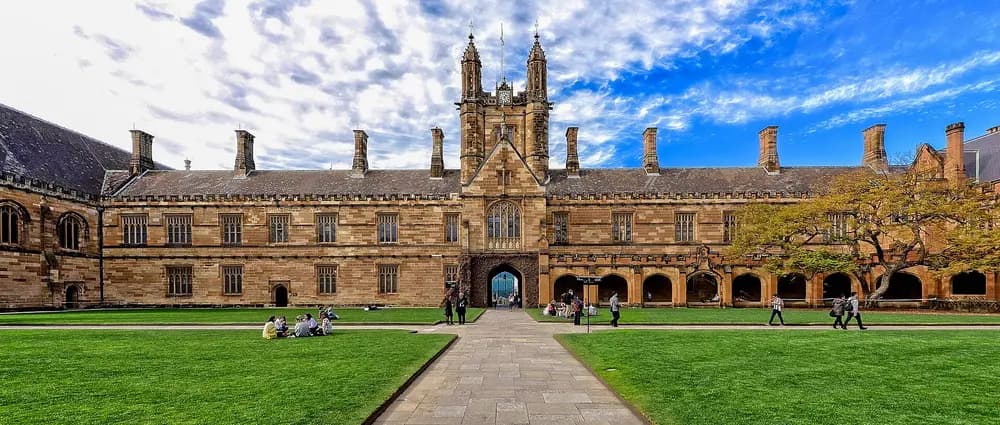
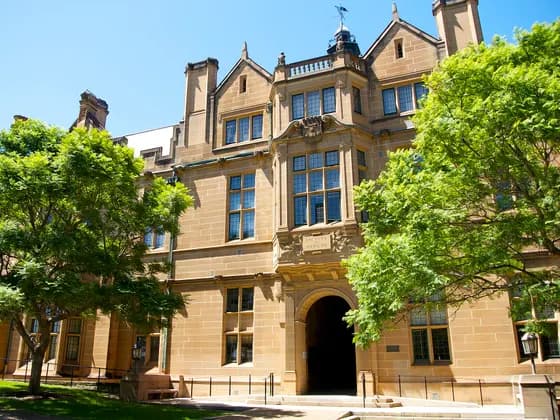
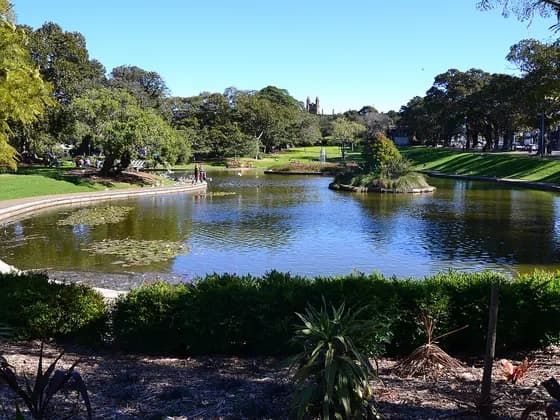
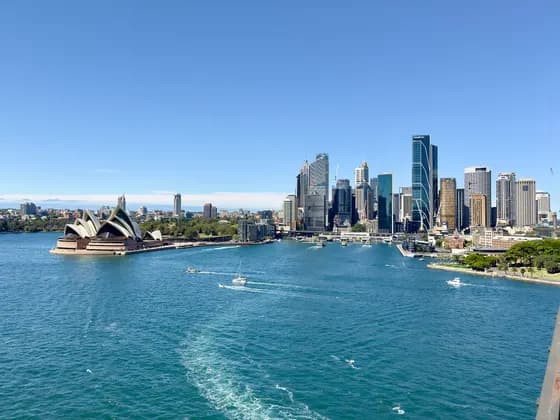
Photo: Jason Tong · CC BY 2.0 · cropped
Photo: Jason Tong · CC BY-SA 3.0 · Photo: Sardaka ( talk ) 07:55, 9 July 2014 (UTC) · CC BY 3.0 · Photo: Chris Olszewski · CC BY-SA 4.0
The Sydney Dental course at a glance (2027 entry)
The Doctor of Dental Medicine (DMD) is the University of Sydney's four-year, full-time course for becoming a dentist, run by the Sydney Dental School in the Faculty of Medicine and Health. Despite the title, it is a professional master's degree, at level 9 of the Australian Qualifications Framework, taken after a bachelor's degree. It is accredited by the Australian Dental Council (ADC), the body that accredits dental courses. Graduates can apply to register as dentists with the Dental Board of Australia through the Australian Health Practitioner Regulation Agency (AHPRA).
The course is 192 credit points, the University's measure of study load, in 12 units that are all prescribed and taken in the year they belong to, so everyone follows the same path. Seven themes run through every year: clinical sciences and skills; oral and systemic biosciences; evidence-based practice; prevention and health promotion; social and cultural oral health; leadership, communication and professionalisation; and interprofessional teamwork. This structure began with the 2023 intake.
Hands-on work starts in the first weeks, with simulation clinic sessions on manikin teeth and denture-making in the laboratory. Contact with patients then grows in steps. You assist in clinics in Year 1, treat your first patients under supervision in Year 2, attend weekly clinic sessions in Year 3 and take on increasingly complex care in Year 4.
You move between three sites: the Camperdown/Darlington campus, Surry Hills, where Sydney Dental Hospital stands, and Westmead, home of the Westmead Centre for Oral Health. Final-year students can also take rural placements in towns across NSW. Expect a full-time, in-person timetable with long years, compulsory attendance and assessment that asks you to meet a set standard in every task rather than reach an overall mark.
| Degree | DMD (Doctor of Dental Medicine), a professional master's degree |
|---|---|
| Course length | 4 years full time, starting in February; not available part-time |
| Structure | 12 prescribed units, 192 credit points, taken in a set order |
| Main sites | Camperdown/Darlington, Surry Hills and Westmead (Year 4) |
| Teaching style | Integrated: seven themes run through every unit |
| Simulation | Half of hands-on time in the Simulation Centre, which has 61 units |
| First patient contact | Assisting in clinics from Year 1; treating patients from Year 2 |
| Placement area | Sydney Dental Hospital, Westmead and other Sydney clinics; rural NSW towns |
| Accreditation | ADC accredited to 31 December 2031, with seven conditions set July 2026 |
What makes the Sydney Dental course different
Half your hands-on time in simulation
The School says half of students' hands-on time is spent in its Simulation Centre, where each simulation unit is set up like a dental surgery with a manikin patient. You practise fillings, root canal treatment, crowns and extractions in simulation before clinic, with immediate three-dimensional, audio and written feedback.
A final year built around complex care
Final-year units, first run in 2026, focus on patients with increasingly complex needs: people with special needs, including intellectual, developmental and physical disabilities, in Semester 1 and older patients in Semester 2.
A supervised group project in Year 2
Across two semesters of Year 2 your group carries out a supervised project: an experiment, a critical review of a clinical question, education research, policy work or a community or industry project. You present it as a poster and short talk at a student-led conference at the start of Year 3.
Electives that include teaching junior students
Besides the required two weeks of clinic, the electives offer a Clinical Teaching Module, in which you teach Year 1 and Year 2 pre-clinical classes, and a Leadership Module.
Rural placements in NSW towns
Final-year dental students have given free care to local residents in towns such as Mudgee and Bathurst, on placements the Faculty describes as eight weeks long, with four days a week of patient care.
How Sydney Dental teaches dentistry
Each semester is built around one large unit, such as Introduction to Dentistry or Core Clinical Practice 2, with the seven themes taught side by side inside it. Bioscience, clinical skills, research and professional topics therefore share each week's timetable, as the typical week section shows.
The balance shifts as you go. Year 1 and the first half of Year 2 centre on biosciences, simulation and laboratory work, with clinic sessions in which you mostly observe and assist. From Year 3 the clinical sciences and skills theme grows in prominence alongside the others, and Year 4 turns to patients with complex needs.
Interprofessional learning, about working in teams with other health professions, starts with a Faculty-wide workshop in Year 1. Year 2 brings the Health Collaboration Challenge, a group video task, and Year 3 a patient safety workshop.
The ways you will learn
| Simulation clinic sessions | Sessions of three to three and a half hours working on artificial teeth in a manikin head, often called a phantom head. Fillings, scaling, X-rays, root canal treatment and crowns are all practised here first. |
|---|---|
| Laboratory sessions | Three-hour prosthodontics laboratories in which you make dentures step by step. Year 2 adds partial denture design in the laboratory at Westmead, and in Year 3 laboratory sessions follow the stages of denture-making in the removable prosthodontics clinical course. |
| Lectures and seminars | Mostly one hour long, many live on Zoom or pre-recorded on Canvas, the University's online learning site. Year 4 adds a lecture series that walks through prosthodontic cases, and guest lectures from practising dentists. |
| Tutorials and case-based work | Skills studios, communication workshops and bioscience tutorials are interactive classes. Case-based learning, a guided discussion of a prepared case, is used for treatment planning in Year 2. Year 3 adds problem-based learning, where your group works out what to learn from a case, and team-based learning on patient safety. |
| Rostered clinics | Usually three-hour sessions allocated by roster. From Year 3 you rotate through integrated care, acute care for dental emergencies, gum care (periodontics), dentures (removable prosthodontics), extraction and specialty clinics, under the direct supervision of registered clinical educators. |
A typical week on the Sydney Dental course
The 2026 unit outlines list every timetabled session. Week 2 of Year 1 Semester 1, for example, held a 3-hour denture laboratory and a 3-hour cavity preparation practical. Around them sat a skills studio on learning how to learn, a critical appraisal tutorial, a Faculty-wide interprofessional workshop, a practical on oral bacteria, a tutorial on taste and smell and short seminars. In all, that came to about 24 scheduled hours, including two of self-study.
From Year 3 the week is anchored by rostered 3-hour clinic sessions, with simulation, lectures and workshops around them. The minimum expected workload is 1.5 to 2 hours of study per credit point per week, roughly 480 to 600 hours for each 24-credit-point unit.
The year is long. In the 2026 calendar, Years 1 and 2 started on 2 February, with three pre-semester teaching weeks, and Years 3 and 4 on 19 January. Every year ran to formal exams in late November. A three-week window followed, until the semester break on 21 December, which students must keep free in case they need remediation or extra assessment.
Attendance is compulsory: you must attend at least 90 per cent of required learning activities, including tutorials, workshops, practicals, clinics and assessments, and watching a recording does not count.
How anatomy is taught at Sydney Dental
Anatomy belongs to the oral and systemic biosciences theme and concentrates on the head and neck, taught alongside tooth morphology (the shape of each tooth), histology (tissues under the microscope) and pathology. In the 2026 timetables, Year 1 Semester 1 opens with an introduction to anatomy and practicals on the skull and vertebral column. Tooth morphology tutorials and a tooth-drawing workshop take you through each group of teeth.
In Semester 2 you study the chest from prosections, specimens already dissected by trained staff, in two sessions on the lungs and the heart. Teaching then moves to dissection practicals: three on the neck and three on the face and parotid (salivary) gland. One learning outcome of the unit is to show professionalism while learning in the anatomy dissection room.
Year 2 continues with dissection of the jaw joint and chewing muscles, the infratemporal fossa (a space deep to the jaw), the cranial cavity and brain, and the orbit (eye socket). You also have practicals on the mouth. Semester 2 adds dissection of the pharynx (throat), larynx (voice box) and tongue, the nose and the ear. Both Year 2 semesters include an anatomy spot test, a practical test of identifying structures. Anatomy is also applied directly, as in a lecture on anatomy for local anaesthesia and a tutorial on how infection spreads through the face and jaws.
When you start treating patients at Sydney Dental
Before your first clinic you must complete NSW Health checks, and the University registers you as a dental student with the Dental Board of Australia through AHPRA, at no cost. The 2026 Year 1 timetable included a compulsory orientation day at Sydney Dental Hospital, workshops on infection control, clinical records and taking a patient history, and a briefing for the First Learning Clinics.
In those Year 1 sessions you assist with dental care for patients, and in Semester 2 you take part in patient interviews and dental examinations. Before moving on to each new stage of patient care you must pass barrier clinical skills assessments, which the School treats as a patient safety requirement.
Year 2 Semester 1 adds local anaesthesia and extractions in simulation, with a compulsory competency assessment in local anaesthesia. Most clinic time that semester is observational: integrated observational clinics and radiology clinics at Sydney Dental Hospital, an extraction observation clinic and final-year students' oral surgery sessions.
You first treat patients yourself in Year 2. In Semester 2, Core Clinical Practice 1 places you in integrated clinics, and its outcomes include fillings, first-stage gum treatment and giving local anaesthetic, always under direct supervision. You also work towards assessing patients and planning their treatment with them.
From Year 3 you attend weekly 3-hour clinic sessions mixing general care with specialist clinics. The unit outcomes include root canal treatment on a molar in the simulation clinic and on patients' single- and double-canal teeth, along with extractions and managing dental emergencies.
All treatment by students is directly supervised by registered clinical educators. At the Westmead Centre for Oral Health, senior DMD students in the University General Practice clinic give eligible patients check-ups, gum treatment, fillings, root canal therapy, crowns, bridges, dentures and extractions.
Year by year at Sydney Dental
- Year 1
Foundations: the mouth, the body and your first fillings
Year 1 has two 24-credit-point units: Introduction to Dentistry in Semester 1, based at Camperdown/Darlington, and Foundations of Dentistry 1 in Semester 2, based at Surry Hills. Biosciences, prevention, research skills and professional development run alongside simulation clinic and laboratory work from the first pre-semester week. Details here follow the 2026 unit outlines.
- Fillings (tooth conservation) in simulation: rubber dam (a sheet that isolates the tooth), then cavities for glass ionomer, composite and amalgam fillings. Semester 2 has 20 tooth-conservation simulation sessions, and there is a practical test each semester.
- Prosthodontics (dentures, crowns and bridges): in the laboratory you work through the steps of making dentures, ending with an upper complete and lower partial acrylic denture, assessed in a 2.5-hour practical exam.
- Periodontics (gum care): scaling practised in simulation, then on each other. Semester 2 adds X-ray technique, with a 3-hour practical assessment, and introductory endodontics (root canal) lectures.
- Biosciences: tooth morphology, histology, oral microbiology, pain, pharmacology and nutrition, plus tutorials on conditions such as asthma, heart disease, diabetes and fainting and what they mean for dental care.
- Professional and community strands: skills studios, ethics, oral health promotion, oral health and social hardship, and Indigenous oral health through online cultural competence modules and the Aboriginal Sydney MOOC (an open online course).
- Evidence-based practice: critical appraisal, a 5-minute presentation and a 1,000-word report on an enquiry topic; in Semester 2 your DMD project group presents its rationale and writes an 800-word background.
- Year 2
Anaesthesia, extractions, root canals and the move into clinics
Year 2 pairs two 18-credit-point units at Surry Hills, Foundations of Dentistry 2 and Core Clinical Practice 1, with the two 6-credit-point DMD Project units. Semester 1 adds local anaesthesia and oral surgery to the simulation program, with mostly observational clinics. In Semester 2 you join integrated clinic placements, where you start treating patients, and begin children's dentistry.
- Local anaesthesia: sharps safety, lectures on techniques, doses and complications, practical sessions, a video task and a compulsory simulation competency assessment.
- Oral surgery: when and how teeth are removed, an extraction practical on manikins and observation clinics; Semester 2 adds suturing, case reports and lectures on complications and medical emergencies.
- Root canal treatment in simulation: incisors and premolars, then rotary instruments, emergency care and molars, ending in a 3-hour summative simulation assessment.
- Integrated clinics: treatment planning seminars, a case-based learning session, a treatment plan critique and an unseen clinical case (a new patient case you analyse) on video. You also attend observational and integrated clinic placements and radiology clinics.
- Also: complex fillings, partial denture design, CT and cone-beam CT imaging, jaw joint disorders and splints, children's dental development and behaviour management, forensic dentistry and more dissection.
- DMD Project 1 and 2: with your group and a supervisor, about six hours a week, you write a proposal by Week 6, then a progress report and final report in Semester 2.
- Year 3
Weekly clinics and the dental specialties
Year 3 has two 24-credit-point units at Surry Hills, Core Clinical Practice 2 and 3. It opens with pre-semester revision practicals, and orientation sessions are timetabled at both the Westmead Centre for Oral Health and Sydney Dental Hospital. The clinical sciences and skills theme grows in prominence, with weekly clinics alongside modules in orthodontics (straightening teeth), paediatric dentistry, periodontics, prosthodontics, endodontics, oral surgery, oral pathology and oral medicine.
- Weekly rostered clinics, with continuous assessment of your clinical work and the range of clinical experience you gain.
- Crowns, bridges, onlays and veneers through lectures and regular simulation clinic sessions, ending in a 2.5-hour high-stakes practical test; implant planning and computer-designed (CAD/CAM) restorations are introduced.
- Children's dentistry: restorations, pulp treatment, space maintenance, trauma splinting and care of medically compromised children and those with behavioural disorders.
- Problem-based learning cases in paediatric dentistry, removable prosthodontics and oral surgery, plus workshops on intravenous sedation, medical emergencies and complaints management.
- A student-led conference at the start of the year where you present your DMD project, Mentor Program sessions, a rural placement information session and Electives 1.
- Exams: 20-minute vivas (oral exams), virtual case-based clinic exams, written exams and an unseen clinical case that you analyse and present.
- Year 4
Complex care, special needs and older patients
Year 4 has two 24-credit-point units, Extramural and Advanced Clinical Practice 1 and 2, based at Westmead and first run in 2026. Most of your time is spent at a primary metropolitan clinical placement site and specialist clinics, with opportunities for extended rural placements. Semester 1 focuses on special needs and interprofessional communication, Semester 2 on older patients and the law and regulation of dentistry.
- Orientation days in 2026: three at the Westmead Centre for Oral Health, two at Sydney Dental Hospital and one at each of three other hospital dental sites.
- Special needs dentistry: consent, intellectual and developmental disabilities such as Down syndrome, autism and cerebral palsy, physical disabilities, dental anxiety and non-drug behaviour management.
- Implants: theory in Semester 1, then a hands-on implant workshop in the Sydney Dental Hospital simulation clinic, an implant planning workshop and lectures on implant surgery, crowns and complications.
- The profession: a business for dentistry module, a guest lecture on running a private practice, a written task on law and regulation, and the ethics of cosmetic dentistry.
- Emergency and sedation skills: medical emergency exercises, CPR workshops, nitrous oxide sedation workshops at Westmead and a local anaesthesia update.
- Assessment: unseen clinical case oral exams, oral surgery vivas, written exams, continuous workplace assessment and portfolios mapped to the ADC's competencies for a new dentist.
How you are assessed at Sydney Dental
Assessment is longitudinal and integrated: each year has a portfolio-based program of exams and in-class tests, skills assessments, clinical assessments and submitted work, mapped to the seven themes. A Portfolio Advisory Group reviews your progress in each theme and decides whether you progress, and professionalism and attendance count towards that decision.
Most 2026 unit outlines grade the unit as satisfied or failed requirements, but Extramural and Advanced Clinical Practice 1 uses the University's usual grades, from fail to high distinction. The outlines stress that no total mark decides progression: you must reach the expected standard in each individual assessment. Knowledge tests have set pass marks, such as 50 per cent in Foundations of Dentistry 1 and 65 per cent, with 85 per cent for a pass with merit, in Core Clinical Practice 1.
Written exams fall in the formal exam periods, and practical tests in simulation cover cavity preparation, periodontal instrumentation, X-ray technique, root canal treatment and crowns. Year 2 has an integrated bioscience and nutrition OSCE (Objective Structured Clinical Examination), listed as a written exam. The School describes its station exams as a circuit of timed stations with models, photographs and X-rays, where you write short answers. Year 3 has an integrated clinic OSCE sat on your own device on campus.
From Year 3, 20-minute vivas test oral medicine, oral pathology, oral surgery and radiology, and later oral surgery alone. In Year 4 the unseen clinical case becomes an oral exam. In the 2026 Semester 2 outline you get 50 minutes to study the case, then give a 10-minute presentation and face a 15-minute viva. Clinical educators assess your clinic work continuously, and you submit a reflective portfolio every semester.
If you fall short, the Portfolio Advisory Group can set remediation, extra tasks or further assessment, and any reassessment is a single attempt. The School's assessment provisions, last amended in 2020, cap a reassessment mark at 50 per cent and rule it out for continuous clinical assessment, professionalism, attendance and clinical experience. Under the rules for students starting from 2026, a failed unit is repeated when next offered, usually a year later, as each unit runs once a year. The 2025 rule, which still covers students who started in 2024 or 2025, meant repeating the whole year.
Accreditation: after a reaccreditation review in August 2024, the ADC accredited the DMD for seven years from 1 January 2025, with three conditions that its 2026 report records as since met. Following concerns raised from December 2025 and a site visit on 25 May 2026, its decision of 24 July 2026 kept the course accredited until 31 December 2031. That decision set seven conditions, with evidence due by 2 October 2026.
- The seven conditions cover supervision at every site and session, academic governance, acting on feedback, equivalent clinical learning across sites, supervisor training and calibration, accurate clinical assessment records and the new paired-student clinical model.
- The 2026 report found inconsistency across sites and cohorts in supervision, patient allocation and the reliability of assessment records. It also found that students are generally considered to reach the expected level of competence by the end of the course, and noted Local Health Districts' positive view of graduates.
- In early October 2026 the ADC's accredited programs list still showed the DMD with conditions; the ADC updates the list once all conditions are met.
Where you will actually be at Sydney Dental
Semester 1 of Year 1 is at the Camperdown/Darlington campus. Units from Year 1 Semester 2 to Year 3 are based at Surry Hills, home of Sydney Dental Hospital at 2 Chalmers Street, and Year 4 units at Westmead. Some sessions cross over, such as the Year 2 prosthodontics laboratory at Westmead.
Clinical teaching relies mainly on public dental services run by NSW Local Health Districts (LHDs). The ADC lists the course's campus as the Westmead Centre for Oral Health, at Westmead Hospital in Western Sydney LHD, and Sydney Dental Hospital, part of Sydney LHD. The course page also names Nepean Hospital and Campbelltown Hospital among its clinical connections, and the School names the Nepean Centre for Oral Health.
Official pages describe rural placements differently. The Faculty's placement-partner page says final-year dental students are rostered to a rural partner for eight weeks, working in pairs. They see patients four days a week, in at least two 3-hour sessions a day, with one day for community engagement and rural cultural experience. The 2026 calendar lists four eight-week Year 4 rural rotations between February and October.
The University's September 2026 news says around 50 dental and oral health students volunteer each year. The Year 4 unit pages speak of opportunities for extended rural placements, and the Faculty's rural page lists the dental rural program among options for students interested in rural health. In 2026 dental and oral health students worked in clinics in Bathurst, Mudgee, Warilla, Broken Hill, Ballina, Nowra and Kempsey. The program is supported by a federal grant, with extra NSW Health funding for Broken Hill. Ask the School how places are allocated.
Before any placement you need NSW Health verification, including a national police check and vaccination records, plus first aid and CPR certificates and a Working with Children Check. Dental work includes exposure-prone procedures, in which blood-borne viruses are much more likely to be passed on, so you also make a blood-borne virus declaration. NSW Health verifies it and you renew it every three years. For rural placements with partner organisations, the Faculty says students usually arrange their own accommodation, and it helps them find scholarships and bursaries.
Year 1 Semester 1 and supervision of the DMD Project units.
- University of Sydney Camperdown/Darlington campus
Base for units from Year 1 Semester 2 to Year 3: orientation, observational and radiology clinics and rostered clinic sessions.
- Sydney Dental Hospital, 2 Chalmers Street
Base for Year 4 and the elective units; also used for Year 2 laboratory sessions and Year 3 orientation.
- Westmead Centre for Oral Health, Westmead Hospital
- University General Practice clinic
- Prosthodontics laboratory
South Western Sydney LHD's 2023 to 2026 plan aimed to expand University of Sydney DMD placements at the Campbelltown Hospital Dental Centre.
- Nepean Centre for Oral Health
- Nepean Hospital
- Campbelltown Hospital
The course page names LHD dental hospitals in the first five; the rest hosted dental and oral health students in 2026. A Northern NSW LHD placement partnership, renewed in September 2026, includes dentistry.
- Ballina
- Broken Hill
- Dubbo
- Orange
- Armidale
- Bathurst
- Mudgee
- Warilla
- Nowra
- Kempsey
Electives, selectives and options at Sydney Dental
There are two elective units, Electives 1 in Year 3 Semester 2 and Electives 2 in Year 4 Semester 1. They carry no credit points, but completing them is recorded on your transcript. Each offers supervised experience in an area of dentistry you choose, locally, interstate or overseas, to explore a career direction or build particular skills. You can organise your own, with help from the Academic Elective Coordinator. Formal international exchange is not available in the DMD.
The 2026 outlines say you complete two weeks of clinic across Years 3 and 4, during mid-semester breaks: one week in the university hospitals' specialty clinics and one week observing outside them. You reflect on it in a poster of five to seven slides, and with approval a case report can replace a placement you cannot complete. The Clinical Teaching and Leadership Modules are further options, and you can take more than one module if time allows.
The Clinical Teaching Module starts with nine one-hour lectures on teaching, from adult learning to giving feedback. A practicum follows: five 3-hour sessions teaching in Year 1 and Year 2 pre-clinical classes, assessed through a reflection and an interview with a clinical educator. The Leadership Module has eight sessions on topics such as leadership styles, change, career planning and difficult conversations, and your group interviews leaders in dentistry and higher education.
Intercalation and research degrees at Sydney Dental
The DMD is awarded at pass grade only, and every unit is prescribed, so there is no Honours stream within it. Research is built in instead through the DMD Project in Year 2. The course page lists the PhD and Master of Philosophy in Medicine and Health as related research degrees.
Facilities and support at Sydney Dental
Where you will learn
The Sydney Dental School Simulation Centre opened in October 2023 in the School's Bligh Building, after a $9.4 million investment, and the University said its location reconnects dental students with the Camperdown campus. Alongside its 61 simulation units are extended reality (XR) training and computer-aided design (CAD) planning rooms with eight CAD stations, digital dentistry studios with intraoral and extraoral scanners, and 3D printing and milling machines.
For imaging there is a cone-beam CT unit for 3D X-rays, nine intraoral X-ray units, seven Vistascan scanners and two Leica microscopes.
Sydney Dental Hospital runs a Clinical Dentistry clinic where dental students provide general care, prosthodontics, endodontics, periodontics and restorative treatment. Its specialist clinics cover orthodontics, paediatric dentistry, oral surgery, oral medicine, radiology and special care dentistry, and the Dalarinji Oral Health Clinic serves Aboriginal and Torres Strait Islander people. Its Level 5 simulation clinic hosted the 2026 Year 4 implant workshop.
At the Westmead Centre for Oral Health, inside Westmead Hospital, the University General Practice clinic occupies Levels 1 and 3, and dental laboratories with 17 technicians support students' work.
Support while you study
Support is built into the assessment system. Each semester you meet a Learning Advisor to review your achievements, and the Portfolio Advisory Group meets at the end of Semester 1 to review progress in each theme. The School's assessment provisions say remediation, academic support to clear up errors and misunderstandings, comes before any reassessment, and you can ask staff for a meeting if you are struggling.
Year 1 skills studios cover learning how to learn and academic writing, and Year 3 has a Mentor Program with sessions on the clinical rosters. After student feedback, Year 1 gained optional, minimally supervised practice sessions in the simulation clinic and extra prosthodontics laboratory sessions.
Final-year portfolios include a wellbeing reflection and a personal wellbeing action plan. Dental Practitioner Support, a national service, offers health and wellbeing support around the clock to dental students as well as practitioners. If you have a disability or health condition, the University's inherent requirements document sets out what dentistry involves, such as working for 2 to 4 hours at a stretch and fine manual dexterity. Disability Services can arrange reasonable adjustments.
Is the Sydney Dental course right for you?
This course may suit you if
- You want hands-on work from the first weeks: simulation clinic and denture laboratory sessions start in the pre-semester weeks of Year 1.
- You like a fixed, structured path, with every unit prescribed and the same seven themes running through each year.
- You are drawn to caring for people with special needs, older patients and complex cases, which shape the final-year units.
- You would enjoy teaching or leadership, through electives in which you teach junior classes or interview leaders in dentistry.
- You are curious about rural dentistry: final-year dental students have given care in towns such as Mudgee and Bathurst.
Things to think about
- The ADC's 2026 review found differences between clinical sites and set seven conditions; check the ADC's accredited programs list for their current status.
- The calendar is long: Years 3 and 4 started on 19 January in 2026, and every year asks you to keep mid-December free in case you need remediation.
- You will travel between Camperdown, Surry Hills and Westmead, and a final-year rural placement can mean eight weeks away from Sydney.
- There is little flexibility: no part-time study or international exchange, at least 90 per cent attendance, and a failed unit is repeated when it next runs, usually a year later.
- Patient care builds gradually: Year 1 and much of Year 2 centre on simulation and laboratory work, you start treating patients in Year 2, and weekly clinics begin in Year 3.
Sydney Dental course — frequently asked questions
Applying to Sydney Dental?
How to get into Sydney Dental
Entry requirements, admission tests, written application and interview, step by step.
Open the guide →Sydney Dental entry requirements
ATAR or GPA, GAMSAT and UCAT ANZ thresholds, interview format and place types.
See the requirements →Compare Sydney Dental with other schools
Put the teaching style, anatomy teaching and placements next to another school.
Open the comparison →Prepare for the Sydney Dental interview
Format breakdown, school-specific sample questions and prep tips from tutors who interviewed here.
Read the guide →Where this Sydney Dental course guide came from
This guide was written from 50 official sources — University of Sydney School of Dentistry's own course pages and programme documents, plus the Australian Medical Council or Australian Dental Council and the health services the school places students with where they publish detail — read on 2026-10-10, then checked claim by claim against those sources.
- University of Sydney: Doctor of Dental Medicine course page
- University of Sydney Handbook 2026: Doctor of Dental Medicine unit of study table
- University of Sydney Handbook 2026: Doctor of Dental Medicine course resolutions
- University of Sydney Handbook 2026: Doctor of Dental Medicine learning outcomes and themes
- University of Sydney Handbook 2025 archive: Doctor of Dental Medicine course resolutions (earlier progression rule)
- Unit page: SDDM5115 Introduction to Dentistry
- Unit outline 2026: SDDM5115 Introduction to Dentistry
- Unit page: SDDM5125 Foundations of Dentistry 1
- Unit outline 2026: SDDM5125 Foundations of Dentistry 1
- Unit page: SDDM5215 Foundations of Dentistry 2
- Unit outline 2026: SDDM5215 Foundations of Dentistry 2
- Unit page: SDDM5216 DMD Project 1
- Unit outline 2026: SDDM5216 DMD Project 1
- Unit outline 2026: SDDM5226 DMD Project 2
- Unit page: SDDM5225 Core Clinical Practice 1
- Unit outline 2026: SDDM5225 Core Clinical Practice 1
- Unit page: SDDM6311 Core Clinical Practice 2
- Unit outline 2026: SDDM6311 Core Clinical Practice 2
- Unit page: SDDM6321 Core Clinical Practice 3
- Unit outline 2026: SDDM6321 Core Clinical Practice 3
- Unit page: SDDM5328 Electives 1
- Unit outline 2026: SDDM5328 Electives 1
- Unit page: SDDM6411 Extramural and Advanced Clinical Practice 1
- Unit outline 2026: SDDM6411 Extramural and Advanced Clinical Practice 1
- Unit page: SDDM5418 Electives 2
- Unit outline 2026: SDDM5418 Electives 2
- Unit page: SDDM6421 Extramural and Advanced Clinical Practice 2
- Unit outline 2026: SDDM6421 Extramural and Advanced Clinical Practice 2
- Sydney Dental School 2026 academic calendar (PDF)
- Sydney Dental School Assessment Provisions (text last amended January 2020)
- Sydney Dental School Attendance Provisions
- Doctor of Dental Medicine Domestic Admissions Guide 2027: attendance and post-offer requirements (PDF)
- Inherent Requirements for Dentistry Courses (PDF)
- Sydney Dental School Simulation Centre
- University of Sydney news, October 2023: new simulation centre to train dentists
- Sydney Dental School home page
- Faculty of Medicine and Health: student placement partnerships, dentistry and oral health
- University of Sydney: course-required placements (dentistry and oral health)
- University of Sydney: clinical placement checks and clearances
- Faculty of Medicine and Health: rural placements
- University of Sydney news, September 2026: dental students on rural placements
- University of Sydney news, September 2026: Northern NSW Local Health District partnership renewed
- Australian Dental Council: accredited programs list
- Australian Dental Council: report on the University of Sydney DMD, May 2026 targeted monitoring review (decision July 2026)
- Dental Board of Australia: student registration and graduates
- Sydney Local Health District: about Sydney Dental Hospital
- Sydney Local Health District: Sydney Dental Hospital services
- Western Sydney Local Health District: oral health services and Westmead Centre for Oral Health
- Nepean Blue Mountains Local Health District: public dental services
- South Western Sydney Local Health District: Oral Health Services Operational Plan 2023 to 2026 (PDF)
Courses are restructured between cycles. Anything here that decides your application — an anatomy offer, a placement city, a compulsory intercalated year — should be confirmed against the official page for your entry year.
Applying to Sydney Dental?
We have helped hundreds of applicants turn their GAMSAT / UCAT ANZ, written application and interview prep into offers from Sydney Dental and other Australian dentistry schools.