
The UQ Dental course
What you actually study, and where you will be
UQ Dental's BDSc(Hons) is a 5-year (undergraduate entry) course taught through case-based learning, with patient treatment from Year 3 and placements in Brisbane, Dalby, St George and other Queensland public clinics (2027 entry). UQ's BDSc(Hons) is a five-year, full-time course split between the St Lucia campus and the UQ Oral Health Centre at Herston. You spend Years 1 and 2 on sciences, simulation and practising on classmates, then treat patients in the Oral Health Centre's public clinics from Year 3. Final year is a 39-week clinical placement in public and community dental clinics across Queensland.
- Degree
- BDSc(Hons)
- Length
- 5 years (undergraduate entry)
- Teaching
- Case-based learning
- First patients
- Year 3
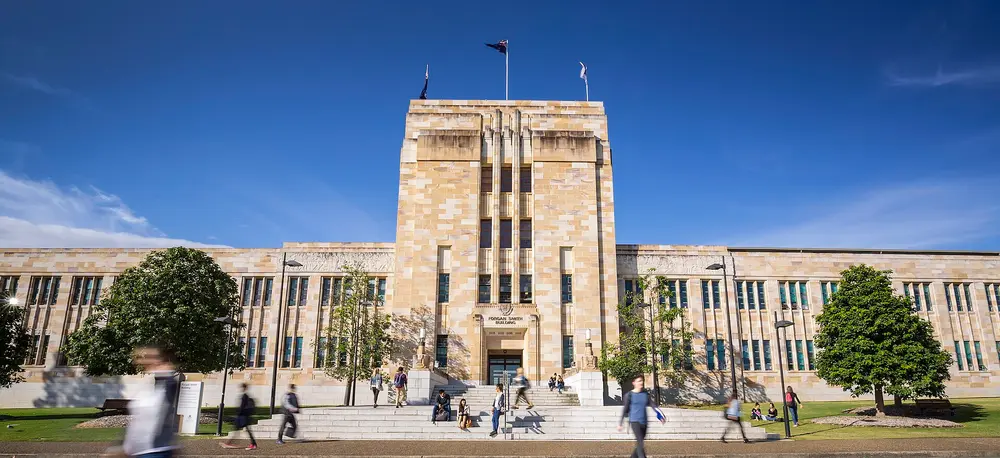
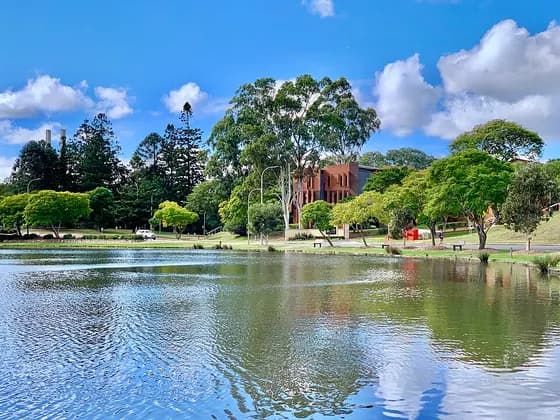
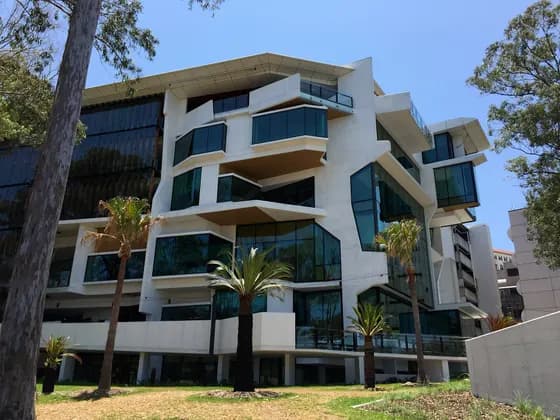

Photo: The University of Queensland · CC BY-SA 4.0 · cropped
Photo: Kgbo · CC BY-SA 4.0 · Photo: Kgbo · CC BY-SA 4.0 · Photo: Kgbo · CC BY-SA 3.0
The UQ Dental course at a glance (2027 entry)
The Bachelor of Dental Science (Honours), or BDSc(Hons), is UQ's five-year, full-time dentistry degree for school leavers and for applicants who already hold another degree. It is run by the School of Dentistry, and the next intake starts on 22 February 2027. UQ also offers a 3.5-year Doctor of Dental Medicine, which is a separate course for graduates.
You study on two campuses. In Years 1 and 2 the general science courses are at St Lucia. The dental courses are at the UQ Oral Health Centre in Herston, apart from the Year 2 anatomy practicals, which were held at St Lucia in 2026. From Year 3 the Oral Health Centre is your base.
The course builds hand skills before patients. For two years you practise in the simulation clinic on manikin heads and in peer clinics, where classmates act as your patients. Treating real patients starts in Year 3, the load grows through Year 4, and final year is a 39-week placement in public dental clinics across Queensland.
Two strands run beside the clinical work: population oral health, which covers public health, ethics and the law, and a research stream that ends in a team project. Every graduate's degree carries a class of honours.
The course is accredited by the Australian Dental Council (ADC), the body that checks dental degrees against national standards, from 1 January 2024 to 31 December 2030. Graduates of an accredited course can apply to the Dental Board of Australia for registration as a dentist. Registration is handled by the Australian Health Practitioner Regulation Agency (Ahpra), which works with the Board.
| Degree | BDSc(Hons), Bachelor of Dental Science (Honours), program 2367 |
|---|---|
| Course length | 5 years full time; next intake starts 22 February 2027 |
| Intake size | 111 students started in Semester 1, 2026, including 24 international students |
| Campuses | St Lucia for Year 1 and 2 sciences; Oral Health Centre, Herston |
| Teaching style | Case-based learning with virtual patients, simulation and supervised clinics |
| Anatomy | Year 2 head and neck course; donated-body practicals at St Lucia in 2026 |
| First patients treated | Year 3, after two years of simulation and peer clinic |
| Final year | 39-week placement in Queensland public and community dental clinics |
| Honours and research | Built in: research stream from Year 3, team project in Year 5 |
| Accreditation | Australian Dental Council, 1 January 2024 to 31 December 2030 |
What makes the UQ Dental course different
Final-year clinics in Dalby and St George
The School runs two satellite clinics with Goondir Health Services, an Indigenous health service, in the rural towns of Dalby and St George. Dalby has five chairs and St George four, each with X-ray equipment. Final-year students give the care, supervised by a registered dentist, with support from the Commonwealth's Rural Health Multidisciplinary Training program.
Clinics run with Metro North's public dental service
Under the Oral Health Alliance, Metro North Hospital and Health Service runs the patient clinics at the Oral Health Centre, where most treatment is given by UQ students under supervision. The ADC noted in 2023 that this agreement assures a ready supply of patients.
A research project that runs over three years
The Research Informed Practice stream starts with judging published studies in Year 3, then a group proposal and ethics application in Year 4. In Year 5 your team of three runs the project, writes a report suitable for a peer-reviewed journal, and each member presents individually.
How UQ Dental teaches dentistry
At UQ, a degree is called a program and its subjects are called courses. Each year of the BDSc(Hons) is 16 units, and every course is compulsory, so your whole year follows the same plan.
The dental courses use case-based learning, where a patient case is the starting point for what you learn. Dental Science I is built around clinical cases, and from Year 1 you meet virtual patients: case stories that show how the science links to diagnosis and treatment. Year 2 has weekly workshops on virtual patient cases, and the population oral health courses in Years 3 and 4 use a series of them.
In Years 3 and 4, each semester pairs a Dental Practice course, covering general dentistry for adults, with a Dental Disciplines course covering specialist areas. These include prosthodontics (dentures, crowns and bridges), endodontics (root canal treatment) and orthodontics (straightening teeth). Clinic time sits beside lectures, case-based clinical coaching, problem-based learning (small groups working through a problem) and simulation, with online UQ Extend modules in between.
By Year 5 almost all learning is clinical. Teaching shifts to online sessions on choosing and planning your cases, weekly structured self-reflection, and periodic audits of your work by the course coordinator.
The ways you will learn
| Simulation clinic (pre-clinic) | Sessions at a phantom head, a manikin head with a moveable jaw, where you practise procedures on model teeth. It starts in your first semester and continues into Year 4, so you rehearse each procedure before doing it in clinic. |
|---|---|
| Peer clinic | Supervised sessions in the Oral Health Centre clinics in Years 1 and 2, where you practise on fellow students and log each session. |
| Supervised patient clinics | From Year 3 you treat patients under registered dentists and specialists. Each session starts with a huddle to discuss your cases with your supervisor, who signs off your logbook entry. |
| Interprofessional tutorials | Small mixed teams with students from programs such as nursing, pharmacy, physiotherapy and speech pathology, following one client's care. They run from Year 1 to Year 4. |
A typical week on the UQ Dental course
In first semester of 2026, Dental Science I meant a two-hour lecture and a three-hour workshop each week at Herston, and Dental Practice IA added pre-clinic and, from week 2, peer clinic sessions. Introductory Cellular Physiology at St Lucia had three lectures and a workshop most weeks, plus four three-hour practicals across the semester.
The M2 bus route loops between St Lucia, the city, QUT Kelvin Grove and the Oral Health Centre in about 35 to 40 minutes. The 2026 pre-commencement guide asked first-years to pick St Lucia classes that did not clash with their dental ones.
From Year 3 your week centres on clinic. In first semester of 2026 Year 3 had six hours of direct patient care in Dental Practice IIIA and about three hours of clinic in Dental Disciplines A, plus lectures, workshops and simulation. Each course also expects about three hours of self-directed study a week.
Year 4 lifts this to about 15 hours of clinical care a week in first semester: six in general practice and around nine in the specialist disciplines. Clinic sessions start at 8:00am and 12:45pm, and you must leave the clinic by 4:45pm. In 2026, Year 5 was generally four days a week on placement, with about one day a week kept for your research project.
How anatomy is taught at UQ Dental
Anatomy starts in Year 1. Dental Science I covers the anatomy and histology (tissue structure under the microscope) of the mouth and nearby structures, and how teeth develop and erupt. Integrated Anatomy and Physiology at St Lucia covers body systems such as the nervous system, lungs, circulation and digestion. Introductory Cellular Physiology uses animal specimens in its practicals.
The main course is Head and Neck Anatomy for Dentistry, in second semester of Year 2. It examines head and neck structures through gross anatomy, the microscope and imaging, with a focus on what matters in general dental practice, such as giving local anaesthetic and doing surgery. In 2026 it had weekly lectures and workshops that mixed group activities with digital anatomy.
In weeks 6 to 12 of the 2026 course, compulsory practicals took place in the Gross Anatomy Facility at St Lucia, using bodies donated to the university. Before your first session you complete online training on the code of conduct for donated tissue and attend an induction. Queensland law requires respectful conduct, and phones and cameras are not allowed in the facility.
Assessment in 2026 was an in-semester exam (30%), a spotter exam in the Gross Anatomy Facility (30%) and a must-pass end-of-semester exam (40%). In the spotter exam you move between labelled models or specimens, with 60 seconds at each station.
When you start treating patients at UQ Dental
You work in clinical spaces from first year, but you do not treat members of the public until Year 3. UQ counts any time in a clinic as clinical placement, so even in Years 1 and 2 you meet pre-placement rules, such as an immunisation record, and follow the clinic dress code.
Years 1 and 2 use the simulation clinic and peer clinics, where you practise on each other under a dentist's supervision. In Year 2 of 2026 you also spent two 90-minute sessions watching Year 3 students treat patients in the removable prosthodontics (dentures) clinic. The 2026 pre-commencement guide and an older School page say clinical work starts in mid second year. In the 2026 course profiles, that means these peer clinics and observation sessions; your own patients come in Year 3.
In Year 3 you take on your own patients at the Oral Health Centre, mainly adults and adolescents needing general care. You examine, diagnose and plan their care before treating them yourself. The specialist course adds clinic time with denture patients, plus assisting and observing.
Responsibility then grows. Year 4 moves to adults with moderately complex needs, medically compromised patients and children, with some experience of patients with special needs. Final year expects you to give comprehensive care at the level needed for independent general practice.
Year by year at UQ Dental
- Year 1
Science foundations and first clinic skills
First year mixes general science at St Lucia with dental courses at the Oral Health Centre. You learn how the healthy body and mouth work, how to interview and examine a patient, and the hand skills for simple restorations on model teeth. Orientation week is compulsory.
- Dental Science I (4 units, Semester 1): anatomy and histology of the mouth, embryology, tooth development and eruption, saliva and oral microbes, and the physics and chemistry behind dentistry, taught through cases.
- Dental Practice IA (Semester 1): communication, safe practice and legal duties, tooth anatomy and history taking. In 2026 it was assessed by a charting quiz, an OSCE (Objective Structured Clinical Examination, timed stations that each test one practical task) and a must-pass final exam.
- Dental Practice IB (Semester 2): minimal intervention dentistry (removing as little tooth as possible), restorative materials, managing tooth decay and a full clinical examination. A pre-clinical skills assessment was worth 40% in 2026.
- Introductory Cellular Physiology (Semester 1) and Integrated Anatomy and Physiology (Semester 2) at St Lucia: cells, biochemistry, nerves and muscles, then the major body systems.
- Chemistry for Dentistry (Semester 2, St Lucia): organic chemistry, polymers, metals, alloys and ceramics, including a module on the chemistry of dental materials. You must attend every laboratory session to pass.
- Professions, People and Healthcare (Semester 2, St Lucia): how Australia's health system works, studied in teams of five or six with students from other health programs.
- A 2026 Dental Science I task: you test a popular dental myth against the evidence in a 750-word commentary, then explain it to a lay audience in a team infographic.
- Year 2
Simulation, anatomy and the specialist disciplines
Second year builds the clinical skills you need before treating patients, mostly in the simulation clinic and peer clinics.
- Dental Practice IIA and IIB: tooth decay and wear, resin (tooth-coloured) fillings, patients with medical conditions and local anaesthetic, all in simulation. Semester 2 of 2026 had about four hours of pre-clinic, three of clinic sessions and three of workshops a week.
- Must-pass competency tests in 2026 included resin restorations in back teeth in both semesters and in front teeth in Semester 2. Semester 2 also had a viva voce, a 15-minute oral exam with two examiners, worth 30%.
- Introduction to Dental Disciplines A: early gum disease and its treatment, materials for dentures, and the science and safe use of radiation. In 2026, peer clinics ran in weeks 7 to 13 and a Multiple Station Assessment Task, a practical exam moving between timed task stations, was worth 35%.
- Introduction to Dental Disciplines B: taking and reading intra-oral X-rays on a manikin, a must-pass competency, and making full dentures in the lab. An in-semester OSCE was worth 40% in 2026.
- Head and Neck Anatomy for Dentistry, with practicals in the Gross Anatomy Facility at St Lucia in 2026 (see Anatomy).
- Integrated Physiology and Pharmacology for Dentistry (St Lucia), Immunology and Microbiology for Dentistry, and Applied Oral Biosciences, which covers genetics, biological chemistry and dental tissue engineering.
- Three interprofessional modules in mixed teams, on trust, communication and teamwork in health care.
- Year 3
Your first patients at the Oral Health Centre
Year 3 starts early, on 8 February in 2027, and is based at the Oral Health Centre. You begin treating patients under supervision, mainly adults and adolescents who need general dental care. Alongside clinic you start the specialist disciplines, dental public health and the research stream.
- Dental Practice IIIA and IIIB: six hours of direct patient care each week, covering examinations, diagnosis, care plans, prevention, gum care, fillings and local anaesthetic, with simple surgical extractions in Semester 1.
- Dental Disciplines A and B (4 units each): removable dentures, crowns, root canal treatment from front teeth to molars and orthodontic assessment, then radiology, oral medicine, oral surgery, children's dentistry and special needs dentistry. Clinic time rises from about three to about six hours a week.
- Must-pass hurdles in 2026 included an oral surgery exam, pre-clinical competencies in root canal treatment and fixed prosthodontics, and an oral care planning case presentation.
- Population Oral Health and Professional Practice I: health promotion, the Australian oral health system, access to care, Aboriginal and Torres Strait Islander health and how dental practice is regulated. In 2026 you developed a health promotion project for an underserved group, written as a grant application.
- Medical emergencies training in clinical simulation sessions early in Semester 2, with an exam on medical emergencies and general medicine.
- Research Informed Practice I (Semester 2): how research works and how to judge it, with a weekly lecture and tutorial and a literature review assignment.
- In 2026 Population Oral Health and Professional Practice I also carried the interprofessional modules on handling conflict and speaking up for clients (Modules 4 to 6): three tutorials and a must-pass team assignment. In 2025 they sat only in Year 4.
- Year 4
More complex patients, children and special needs
Year 4 starts in January (11 January in 2027), so first semester is longer than usual. You treat adults with more complex needs, including medically compromised patients, and learn when and how to refer. Children's dentistry and special needs dentistry become part of your clinical work, and you plan your research project.
- Dental Practice IVA and IVB: six hours a week of direct care for adults with moderately complex needs, including referrals, root canal treatment and, within a full course of care, crowns, bridges or dentures.
- Advanced Dental Disciplines A and B: about nine hours of clinical care a week across prosthodontics, endodontics, paediatric dentistry, orthodontics, radiology, oral medicine and oral surgery, with some experience of patients with special needs.
- In 2026 there were pre-clinical competencies in endodontics, paediatric dentistry and fixed prosthodontics, root canal case portfolios, and case presentations on special needs patients.
- An Extra-Oral Licensing Exam in 2026: 40 questions built around radiographs in 40 minutes, with a 60% pass mark. You must pass it.
- Population Oral Health and Professional Practice II: weekly workshops on bioethics, Ahpra and the Dental Board, negligence, consent and confidentiality, practitioner health and dentistry as a business.
- Research Informed Practice II: your group of up to three writes a research proposal and ethics application for the project you will run in Year 5.
- Interprofessional modules on handling conflict and speaking up for clients, which in 2026 meant three tutorials at St Lucia. They also ran in Year 3 in 2026, so you may meet them a year earlier.
- Year 5
Final-year placement and research project
Final year is almost entirely clinical. UQ describes it as a 39-week placement; in 2026 it ran as two 19-week clinical blocks, from 12 January to 31 May and from 22 June to 8 November, each with a one-week break. You rotate through several clinics and give comprehensive care to the patients allocated to you.
- Dental Practice V A and V B (7 units each): in 2026, generally four days a week on placement, mixing treating your own patients with chairside assisting. You can observe specialists and work with oral health therapists and prosthetists.
- Clinics can include Queensland Health clinics, the Goondir clinics in Dalby and St George, the Aboriginal and Torres Strait Islander Community Health Service (ATSICHS) in Brisbane and the Oral Health Centre.
- You record your work in an electronic logbook, MyProgress ePad.
- Must-pass assessments in 2026: a final clinical competence assessment each semester, a case-based oral exam and an OSCE in Semester 1, and an oral exam on care planning in Semester 2.
- Research Informed Practice III, across the year: your team carries out the project planned in Year 4.
How you are assessed at UQ Dental
UQ grades courses on a 7-point scale and uses hurdles: assessments you must pass to pass the course, whatever your other marks. Most dental courses combine an in-semester exam, practical or competency tests and a must-pass end-of-semester exam. Many written exams are digital and invigilated, and some in-semester exams are held on Saturdays.
Clinical work is judged across each semester. Each clinical course has an interim review of your clinical practice performance, which is formative (feedback only), and a final review that is a must-pass hurdle. In every year the final review cannot be resat or replaced by a supplementary assessment, because it measures skills built over the whole semester (2026 course profiles).
Practical skills are tested in pre-clinical competency assessments, such as a resin restoration or a molar root canal treatment on a model. In some courses a failed hurdle competency can be resat once, with the result capped at a pass. OSCEs appeared in the 2026 profiles for Years 1, 2 and 5.
Progression is strict. You can enrol in the next semester only if you have passed every course in the one before. A grade of 3, which is a fail, may qualify you for a supplementary assessment, where the best grade you can get is a 4, a pass.
Your class of honours, from Class I to Class III, is worked out from your grade point average (GPA) on first attempts at all graded courses in Years 2 to 5. In its 2023 review, the ADC noted that external examiners take part in the final-year viva voce examinations.
- Attendance: 100% is expected. You must attend at least 90% of clinical sessions, rising to 95% in your last two semesters, and at least 90% of pre-clinic, peer clinic and compulsory workshop sessions.
- Missing too many clinical sessions means an incomplete or supplementary grade and an extra week of clinic in the semester break, or a fail below 70% (75% in your last two semesters).
- Logbooks: from Year 3 you log each clinical session as an operator, signed off by your supervising dentist, as a record of the volume and types of treatment you have done.
Where you will actually be at UQ Dental
Most of your clinical training happens in one building. In its 2023 review, the ADC recorded that pre-clinical and clinical training up to the end of Year 4 takes place entirely at the Oral Health Centre. Its patient clinics are run by Metro North Oral Health Services, part of Metro North Hospital and Health Service, under the Oral Health Alliance with UQ.
In 2023 the ADC recommended more exposure to the financial side of treating privately funded patients, while accepting that access to private patients may be hard to arrange. The School now also runs the UQ Herston Dental Clinic, a fee-charging teaching clinic on Level 2 of the Oral Health Centre where dental students treat patients under supervision.
Final year takes you further afield. Year 5 clinics can include Queensland Health clinics run by Hospital and Health Services (the regional bodies that run public health care), Aboriginal and Torres Strait Islander health services and the Oral Health Centre. The 2026 pre-commencement guide says one of your two final-year placements is outside the Oral Health Centre.
Placements may be outside the Brisbane metropolitan area, and you pay your own travel, accommodation and daily living costs. UQ's placement pages tell dental students to ask their Placement Manager, as school accommodation may be available. Before a Queensland Health placement you also complete extra paperwork, including a Student Deed Poll for each Hospital and Health Service you attend.
Base for the dental courses and for all clinical work up to Year 4; also a final-year clinic.
- UQ Oral Health Centre, 288 Herston Road (Metro North Oral Health Services clinics)
Year 1 and 2 sciences, the Year 2 anatomy practicals and some interprofessional tutorials.
- UQ St Lucia campus
- Gross Anatomy Facility
A satellite clinic of the Oral Health Centre since 2013, serving Dalby and the Western Downs, staffed by final-year students.
- Dalby Rural Clinic, at Goondir Health Services (five chairs)
Opened in June 2017. Goondir owns the building and the School provides the fit-out.
- St George Rural Clinic, at Goondir Health Services (four chairs)
Named in the 2026 final-year course profile. ATSICHS says it hosts final-year dental students throughout the year.
- Aboriginal and Torres Strait Islander Community Health Service (ATSICHS) Brisbane
Regional government clinics used in final year. A student on UQ's program page describes a rural placement in Rockhampton.
- Queensland Health Hospital and Health Service dental clinics
Electives, selectives and options at UQ Dental
There are no electives. Every course in the BDSc(Hons) is compulsory. Your choices come within courses, such as the area of your Year 4 research project or the underserved group for your Year 3 health promotion work.
Outside the timetable, UQ's Summer and Winter Research Program lets students who have finished at least one year join a research project with academic staff. The 2027 summer round runs from 11 January to 19 February. School of Dentistry projects include oral health in aged care and cutting sugar intake to prevent tooth decay in young children.
The UQ Dental Students' Association lists domestic and international volunteering opportunities with outside providers, along with academic seminars by practitioners and first aid and CPR courses.
Intercalation and research degrees at UQ Dental
Honours is part of the five-year degree, not an extra year, so there is no intercalated year (a year out to earn an extra degree) to apply for.
In final year your team of three spends about one day a week on the project, fitted around placements. In 2026 the course was assessed by an analytical plan (20%), a team research report written to the standard of a peer-reviewed journal (40%), and an individual oral presentation (40%) that you must pass.
If you leave the course after passing the Year 1 to 3 courses (48 units), you can apply to be awarded a Bachelor of Oral Bioscience instead.
Facilities and support at UQ Dental
Where you will learn
The UQ Oral Health Centre at Herston opened in January 2015. It has more than 150 dental chairs across 11 clinics, two general anaesthetic theatres, two clinical simulation laboratories, two auditoriums, a seminar room complex and research laboratories. It sits across the road from the Herston busway station.
The two pre-clinical teaching labs seat 161. Each workstation has a manikin head with a moveable jaw, dental suction, handpieces and water. The labs also hold surgical microscopes, intra-oral X-ray units, intra-oral scanning and CAD-CAM (computer-aided design and manufacture) equipment and a plaster lab, backed by a technical lab with 3D printers.
Students get lockers on Level 3 of the Oral Health Centre, and the nearest library is the Herston Health Sciences Library at the Royal Brisbane and Women's Hospital. Scrubs are the uniform in the centre's clinics and labs. The School highly recommends loupes, magnifying glasses worn for close work, at a suggested 2.5 times magnification, once you have done formal training; you buy them yourself.
Support while you study
New students can join the Dentistry Peer Mentoring Program, set up as a student-staff partnership. You join a small group led by one or two senior dentistry students, who run catch-ups on and off campus and help with settling in, study and preparing for placements. You can pick a mentor by things like age, gender identity, being a Brisbane local or having moved for study.
The School's Student and Academic Services team, on Level 7 of the Oral Health Centre, handles enrolment, absences and other administration. The BDSc(Hons) has its own Program Convenor, and student representatives take issues to School committees. For a problem with a course, your first contact is the course coordinator.
The UQ Dental Students' Association runs social, academic and sporting events, and membership of the Australian Dental Students Association is free. If you have a disability, illness or mental health condition, a UQ adviser can set up a Student Access Plan with adjustments. UQ's inherent requirements for dentistry set out the core skills the course demands.
The faculty's Placement Ready team helps you meet pre-placement rules. For 2027 Year 1 students the immunisation record is due by 8 February 2027. Before Year 3 you add a blue card (Queensland's Working with Children Check), a National Police Certificate (a criminal history check), the faculty's one-off placement preparation module and Queensland Health orientation modules. You also need current first aid and CPR certificates. For students entering Year 3 in 2027, all of these are due by 18 December 2026.
Is the UQ Dental course right for you?
This course may suit you if
- You want two years to build hand skills on manikins and classmates before you treat members of the public.
- You would like a final year spent mostly in clinics, possibly in regional Queensland or in Aboriginal and Torres Strait Islander health services.
- You want research built into the degree, ending in a team project written up to journal standard.
- You are interested in public dental care, with patients from Metro North's public clinics and two years of population oral health.
Things to think about
- You will not treat patients until Year 3, so compare this with courses that start patient care earlier.
- Final-year placements may be outside Brisbane, and you pay your own travel, accommodation and living costs.
- Progression is strict: every course must be passed before the next semester, and the final clinical reviews have no resit.
- Attendance rules are tight, with make-up weeks in the semester break if you miss too many clinical sessions.
- Senior years start early: Year 4 began on 12 January in 2026 and 11 January in 2027, so summer breaks shrink.
UQ Dental course — frequently asked questions
Applying to UQ Dental?
How to get into UQ Dental
Entry requirements, admission tests, written application and interview, step by step.
Open the guide →UQ Dental entry requirements
ATAR or GPA, GAMSAT and UCAT ANZ thresholds, interview format and place types.
See the requirements →Compare UQ Dental with other schools
Put the teaching style, anatomy teaching and placements next to another school.
Open the comparison →Prepare for the UQ Dental interview
Format breakdown, school-specific sample questions and prep tips from tutors who interviewed here.
Read the guide →Where this UQ Dental course guide came from
This guide was written from 58 official sources — University of Queensland School of Dentistry's own course pages and programme documents, plus the Australian Medical Council or Australian Dental Council and the health services the school places students with where they publish detail — read on 2026-10-10, then checked claim by claim against those sources.
- UQ: Bachelor of Dental Science (Honours) program page
- UQ Programs and Courses: BDSc(Hons) program requirements for students commencing 2027, and the linked course catalogue pages
- UQ School of Dentistry: Bachelor of Dental Science (Honours)
- UQ School of Dentistry: Study
- UQ School of Dentistry: Oral Health Centre
- UQ School of Dentistry: Facilities
- UQ School of Dentistry: Dalby and St George Rural Clinics
- UQ School of Dentistry: Oral Health Centre patient clinics and the Oral Health Alliance
- UQ School of Dentistry: UQ Herston Dental Clinic
- UQ School of Dentistry: Welcome to our new students (peer mentoring)
- UQ School of Dentistry: Summer and Winter Research Program
- BDSc(Hons) and DMD Student Handbook 2026
- School of Dentistry Pre-Commencement Guide 2026: BDSc(Hons)
- UQ course profile 2026: DENT1020 Dental Science I
- UQ course profile 2026: DENT1060 Dental Practice IA
- UQ course profile 2026: DENT1061 Dental Practice IB
- UQ course profile 2026: BIOM1051 Introductory Cellular Physiology
- UQ course profile 2026: BIOM1052 Integrated Anatomy and Physiology
- UQ course profile 2026: CHEM1222 Chemistry for Dentistry
- UQ course profile 2026: HLTH1000 Professions, People and Healthcare
- UQ course profile 2026: BIOM2052 Integrated Physiology and Pharmacology for Dentistry
- UQ course profile 2026: DENT2044 Immunology and Microbiology for Dentistry
- UQ course profile 2026: DENT2060 Dental Practice IIA
- UQ course profile 2026: DENT2070 Introduction to Dental Disciplines A
- UQ course profile 2026: DENT2074 Head and Neck Anatomy for Dentistry
- UQ course profile 2026: DENT2061 Dental Practice IIB
- UQ course profile 2026: DENT2071 Introduction to Dental Disciplines B
- UQ course profile 2026: DENT2222 Applied Oral Biosciences
- UQ course profile 2026: DENT3000 Population Oral Health and Professional Practice I
- UQ course profile 2026: DENT3060 Dental Practice IIIA
- UQ course profile 2026: DENT3070 Dental Disciplines A
- UQ course profile 2026: DENT3021 Research Informed Practice I
- UQ course profile 2026: DENT3061 Dental Practice IIIB
- UQ course profile 2026: DENT3071 Dental Disciplines B
- UQ course profile 2026: DENT4021 Research Informed Practice II
- UQ course profile 2026: DENT4060 Dental Practice IVA
- UQ course profile 2026: DENT4070 Advanced Dental Disciplines A
- UQ course profile 2026: DENT4000 Population Oral Health and Professional Practice II
- UQ course profile 2026: DENT4061 Dental Practice IVB
- UQ course profile 2026: DENT4071 Advanced Dental Disciplines B
- UQ course profile 2026: DENT5100 Dental Practice V A
- UQ course profile 2026: DENT5200 Dental Practice V B
- UQ course profile 2026: DENT5023 Research Informed Practice III
- my.UQ: Prepare for your dentistry placement
- my.UQ: Rural and regional placements, Health, Medicine and Behavioural Sciences
- UQ: Inherent requirements for dentistry programs
- UQ Policy and Procedure Library: Bachelor Honours Degree Procedure
- UQ: How can I become a dentist? (June 2026)
- UQ: Doctor of Dental Medicine FAQs, including how it differs from the BDSc(Hons)
- UQ: Doctor of Dental Medicine program page
- UQ News: New St George clinic to fill gap in dental services (June 2017)
- UQ News: Arming St George to battle bad teeth (April 2016)
- Australian Dental Council: Accredited programs list, University of Queensland
- Australian Dental Council: Evaluation of UQ's Bachelor of Dental Science (Honours), March 2023, updated October 2024
- Dental Board of Australia: Student registration and graduates
- Metro North Health: Oral Health Centre
- Goondir Health Services: Dental Care (Dalby and St George clinics)
- ATSICHS Brisbane: Dental Clinics
Courses are restructured between cycles. Anything here that decides your application — an anatomy offer, a placement city, a compulsory intercalated year — should be confirmed against the official page for your entry year.
Applying to UQ Dental?
We have helped hundreds of applicants turn their GAMSAT / UCAT ANZ, written application and interview prep into offers from UQ Dental and other Australian dentistry schools.