
The Flinders Medicine course
What you actually study, and where you will be
Flinders's MD is a 4-year (graduate entry) course taught through team-based learning in an integrated curriculum, with patient contact from Year 1 and placements in Adelaide, rural South Australia, western Victoria and the Northern Territory (2027 entry). When you apply, you choose where to study: Bedford Park in Adelaide, where the medical school sits inside Flinders Medical Centre, or rural South Australia or the Northern Territory for the whole degree. Years 1 and 2 are mostly on campus, and Years 3 and 4 are full-time clinical placements. Year 12 students can reach the MD through a six-year pathway that starts with a Bachelor of Clinical Sciences.
- Degree
- MD
- Length
- 4 years (graduate entry)
- Teaching
- Team-based learning + Integrated
- Clinical contact
- Year 1
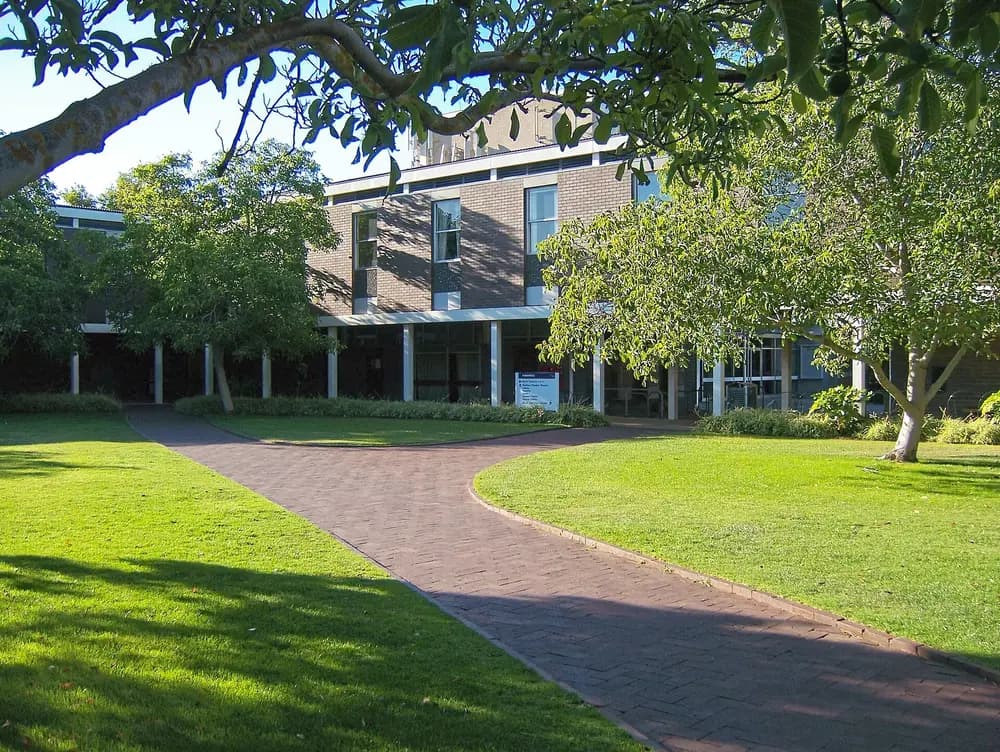
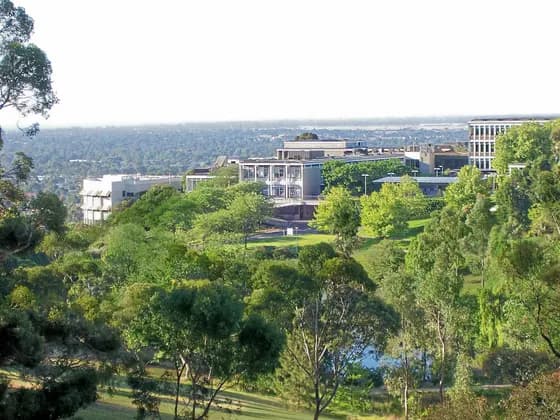
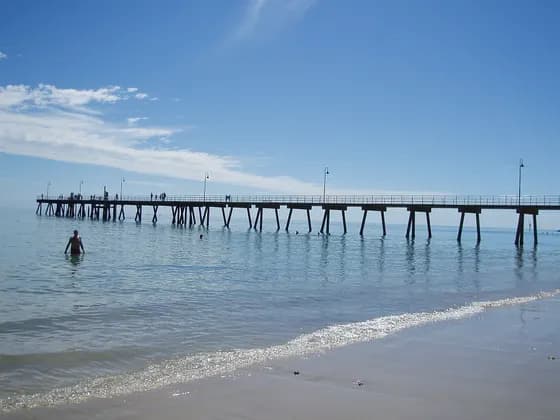

Photo: Cyberjunkie · CC BY 2.5 · cropped
Photo: Cyberjunkie · CC BY 2.5 · Photo: Amanda Slater · CC BY-SA 2.0 · Photo: Yu Chu Chin · CC BY-SA 4.0
The Flinders medicine course at a glance (2027 entry)
Flinders University's Doctor of Medicine (MD) is a four-year, full-time course run by the College of Medicine and Public Health. In Australia the MD is a postgraduate degree, classed as an extended masters, and graduate entry means you start it after a bachelor's degree. Year 12 students can instead take the six-year Bachelor of Clinical Sciences/Doctor of Medicine pathway: two years of science, then the same four-year MD.
Where you study depends on the stream you choose when you apply. Bedford Park students are based in southern Adelaide, where the medical school sits inside Flinders Medical Centre. The South Australia Rural Medical (SARM) Program runs all four years in rural South Australia (SA), starting in Renmark or Mount Gambier. The Northern Territory Medical Program (NTMP) runs all four years in the Northern Territory (NT), starting in Darwin. All three share one curriculum and one set of assessments.
Teaching is organised around four domains used by the Australian Medical Council (AMC), the body that accredits medical courses: Clinical Practice, Professionalism and Leadership, Health and Society, and Science and Scholarship. Years 1 and 2 combine lectures, lab practicals, anatomy and clinical skills workshops with team-based learning, in which you prepare ahead and test yourself with a team each week. Year 2 adds a general practice (GP) placement. Years 3 and 4 are full-time clinical placements, ending with preparation for internship, the first supervised year of work as a doctor, known as PGY1.
Three threads run through all four years. A learning coach meets you one to one to review your results and your portfolio, a record of your progress and goals. Progress tests, 120-question multiple-choice papers sat by every year group, track your knowledge over time. Advanced Studies, a compulsory research or coursework strand, ends in a Year 4 capstone. The AMC accredited the MD in March 2025, with conditions, until 31 March 2028.
| Degree | MD (Doctor of Medicine), an extended masters degree |
|---|---|
| Course length | 4 years full time; 6 years through the school-leaver pathway |
| Where you study | Bedford Park (Adelaide), rural South Australia (SARM) or the Northern Territory (NTMP) |
| Teaching style | Team-based learning, lectures and lab practicals in Years 1 and 2 |
| Anatomy | Lab classes and vivas; dissection of abdomen and musculoskeletal system in Year 2 |
| First patient contact | Year 1; GP placement in Year 2; full-time placements from Year 3 |
| Rural program | SARM: all four years in rural South Australia, up to 60 places |
| Research | Compulsory Advanced Studies, research or coursework, with a Year 4 capstone |
| Combined degrees | MD-MPH (5 years) or MD-PhD (7 years) |
| Accreditation | AMC accredited until 31 March 2028, with conditions |
What makes Flinders medicine different
A medical school inside a hospital
At Bedford Park the medical school sits within Flinders Medical Centre, part of the Southern Adelaide Local Health Network. The course aims credit this location for early patient contact and for bringing teaching, patient care and research together in one place.
The whole degree in rural South Australia
The SARM Program took its first students in 2025. You spend Years 1 and 2 at the Renmark or Mount Gambier campus. Year 3 is one long placement attached to a rural general practice, and Year 4 is six six-week rotations in rural clinical settings.
The whole degree in the Northern Territory
Flinders' NTMP, separate from the medical program run by Charles Darwin University (CDU), teaches Years 1 and 2 in a Flinders building on CDU's Casuarina campus in Darwin. Clinical years are also based in Darwin, and every NTMP student is expected to take a remote placement in Year 3 or 4, which can last a year or more.
A learning coach for all four years
Since 2017 every student has had a learning coach who meets them one to one at regular points through the course. Before each meeting you write an agenda from your portfolio, and afterwards you write up the minutes. A coach usually has four to eight students and does not need to be a doctor.
Research or postgraduate study built into the MD
Advanced Studies is compulsory. After research methods and statistics in Year 1, you choose a supervised research project or postgraduate coursework for Years 2 and 3. Coursework topics include First Nations health, biostatistics, health economics and AI for medicine. In Year 4 you complete a capstone: research outputs and a referee report, or a clinical audit and an evidence-based medicine assignment.
How Flinders teaches medicine
Years 1 and 2 use a flipped classroom: you work through online resources and pre-reading before each timetabled session. The core method is team-based learning. Each week you sit a short individual readiness assurance test, then a team version, before a facilitator takes the class through clinical problems. Your team members also formally review your contribution.
Science and Scholarship, one of the four domains, covers block science, anatomy and Advanced Studies. Clinical Practice covers communication and examination skills, Health and Society covers Aboriginal, public and behavioural health, and Professionalism and Leadership covers ethics, law, coaching and personal development.
Aboriginal and Torres Strait Islander health is a distinct program in Years 1 and 2, recently renewed under the leadership of an Aboriginal health expert. When the AMC visited in October 2024, it found this teaching was not yet carried through Years 3 and 4 at every site, although NTMP students had substantial Indigenous health teaching and placements. It set Flinders deadlines of 2026 for Years 1 and 2 and 2027 for Years 3 and 4.
From Year 3 you learn through work-integrated learning: as part of clinical teams, with bedside and clinic teaching, structured skills workshops and supervised sessions. In 2024 the AMC found the learning outcomes for Years 3 and 4 too loosely set out. Students, most of all at Bedford Park, said they were left to work out what to learn, and the AMC set a 2025 deadline for clearer outcomes.
The ways you will learn
| Lectures and practicals | Specialist lectures carry the core science of each block, backed by lab practicals. For the first half of Year 1 at Bedford Park, the handbook lists 124 hours of lectures, 88 of tutorials and 45.5 of practicals, with 222 hours of independent study. |
|---|---|
| Clinical skills workshops | In Years 1 and 2, small groups practise history taking and examination with tutors, many of them nurses, and structured clinical instructional modules with consultant specialists add discipline skills. Basic and then intermediate life support are taught and assessed. |
| General practice | GP visits and a Year 2 placement, then GP rotations in the clinical years. |
| Simulation | Simulated patients from Year 1, then acute-care simulation in the clinical years, including advanced life support and managing a deteriorating patient. |
A typical week on the Flinders course
Flinders tells international applicants to expect contact hours of roughly 9am to 5pm, Monday to Friday, plus substantial study at home. In the first half of Year 2, the handbook lists about four hours of lectures, two of practicals and an hour and a half of tutorials each week. Across the half-year it also lists 33 hours of seminars, a 30-hour negotiated program and 200 hours of independent study, while team-based learning and clinical skills sessions run weekly.
SARM describes Years 1 and 2 as mostly lectures, tutorials, workshops, clinical skills and simulation, plus independent study. Its June 2024 FAQ, written before the first intake, pictured a Year 3 week of GP-led consulting sessions at your practice, tutorials or workshops, case discussions and simulation. The same FAQ adds ward rounds and specialist clinic or theatre sessions.
How anatomy is taught at Flinders
Anatomy runs through Years 1 and 2. In Year 1 it is taught in lab sessions and examined by a viva, an oral exam held in the anatomy lab. The 2027 handbook names dissection in Year 2: your group dissects the abdomen and then the musculoskeletal system, in the same half-year as the gastrointestinal and musculoskeletal blocks.
Each Year 2 dissection is examined by a lab viva, and you complete a workbook linking what you dissected to clinical practice. Your dissection group also formally reviews each member's contribution. The Renmark campus has its own anatomy lab.
A 2022 College news item says students also learn from prosections, bodies already dissected by staff to show particular structures. The item marked the unveiling of a memorial plaque to body donors at Flinders' Anatomy Museum, and says all South Australian body donation runs through the University of Adelaide. From your first day in the lab, it adds, you learn to treat donors with respect, as your first patients.
When you first meet patients at Flinders
Your first patients, in Year 1, are simulated: members of the community recruited and trained to play patients. Year 1 also includes hospital observation. You are assessed on a history-taking interview in each half of Year 1, and on examining the heart and chest in a simulated consultation. These assessments are video recorded so a second assessor can moderate the marking.
Year 2 adds visits to general practice and a GP placement, where you keep a placement and procedural skills logbook. The second half of Year 2 includes 120 hours of clinical placement, and a ward placement was brought back in 2023 after COVID-19 had cut Year 2 clinical time.
SARM students in Years 1 and 2 also have community placements in local health facilities, including GP clinics and the local hospital. From Year 3 you are on placement full time, expected to work as an active member of the team, though the AMC found in 2024 that this varies by placement.
Year by year at Flinders
- Pathway Years 1-2
Bachelor of Clinical Sciences (school leavers only)
If you enter from Year 12 at Bedford Park, you first spend two years on the Bachelor of Clinical Sciences. A grade point average of at least 5 at the end of the second year takes you into the MD; otherwise you can transfer to the Bachelor of Medical Science. Your first MD year completes the bachelor's degree.
- Year 1 core topics: Molecular Basis of Life, Chemistry 1A, Histology, Introduction to Human Molecular Genetics, Human Immunology and Infectious Diseases, Physiology for Clinical Scientists, and Interpersonal and Interprofessional Communication.
- Year 2 core topics: Biochemistry, Human Physiology, Integrative Human Physiology, Biochemistry of Human Disease, Clinical Chemistry, and Haematology and Transfusion Science.
- Options: one in Year 1, such as epidemiology or Indigenous studies (General Chemistry if you have no chemistry), and two in Year 2, pharmacology or pathophysiology plus a topic such as public health policy.
- NT route: two years of Charles Darwin University's Bachelor of Clinical Sciences in Darwin, with 12 places a year, then the Flinders MD; CDU and Flinders award the bachelor's degree jointly.
- Year 1
Foundations and the first body systems
Year 1 is two 18-unit topics, Medicine 1A and 1B, offered in the same form at Bedford Park, Darwin, Renmark and Mount Gambier. Medicine 1A builds foundations: how the body works from molecules to organ systems, health in Australian society, and first clinical skills. Medicine 1B moves to the lungs, kidneys and heart and begins your research training.
- Each block has its own multiple-choice test: Molecular Foundations of Medicine; Immunity, Microbes and Defence; then the respiratory, renal and cardiovascular blocks.
- Weekly clinical skills, with assessed history taking, case write-ups, an examination of the heart and chest, and basic life support.
- Aboriginal health through weekly written discussion-forum posts, an in-class quiz and the Clinical Yarning Certificate in culturally safe communication.
- A Mental Health First Aid course, a self-care plan and your own personal code of ethics.
- Advanced Studies groundwork: a biostatistics test, a literature-search exercise and a learning journal on choosing research or coursework.
- Year 2
Dissection, the brain and the move to clinics
Medicine 2A covers the gastrointestinal, musculoskeletal, and endocrine and reproductive systems, with dissection alongside. Medicine 2B, a 13.5-unit topic, covers neurology and psychiatry and includes a Transition to Clinical Practice block. Your first Advanced Studies topic runs in the second half of the year.
- Block tests in the gastrointestinal, musculoskeletal, and endocrine and reproductive blocks, then in neurology, psychiatry and Transition to Clinical Practice.
- Simulated consultations on the gut, urinary and musculoskeletal systems, then a neurological assessment; intermediate life support.
- A medical humanities project and a personal and professional development elective.
- A general practice placement, assessed through a logbook.
- A legal and ethical case study, an Aboriginal health reflective essay and a public health essay.
- The Clinical Skills Consolidation assessment at the end of the year.
- Year 3
Full-time placements
Medicine 3A and 3B start two years of supervised placements across medicine, surgery, anaesthesia, paediatrics, obstetrics and gynaecology, general practice and psychiatry. Each half-year has about 405 hours on placement and a weekly three-hour workshop. In 2024 the AMC reported that the year opens with intensive skills workshops and that a year-long Longitudinal Academic Program runs alongside placements. The rotation lists below come from Flinders' latest published plan, its 2023-25 model.
- Bedford Park, 2023-25 model: six-week rotations in general medicine, general surgery, mental health, child health, women's health and general practice.
- SARM: a year-long placement based in a rural general practice, also using hospitals, community outreach agencies, Aboriginal medical services and health centres.
- NTMP, 2023-25 model: eight weeks each of general medicine and general surgery, four of mental health, and a 20-week community-based semester covering child health, women's health and general practice.
- A healthcare law and ethics task: a 250-word case summary, a workshop discussion and a 750-word critical analysis.
- The Year 3 OSCE (Objective Structured Clinical Examination), an exam of timed clinical stations, in the second half of the year; you must pass it to enter Year 4.
- Advanced Studies continues in the first half of the year.
- Year 4
Getting ready for internship
Medicine 4A and 4B bring you to the standard of a new intern, with further rotations, the Transition to Internship Program of lectures and workshops, and the Advanced Studies capstone. After graduating you apply for provisional registration with the Medical Board of Australia; completing the intern year (PGY1) makes you eligible for general registration. In South Australia, internships are allocated by South Australian Medical Education and Training.
- Bedford Park, 2023-25 model: six-week blocks in specialty medicine, specialty surgery, emergency medicine and a rural placement, a medical selective chosen from set options, and an elective.
- SARM: six six-week rotations in rural clinical settings, plus intensives and intern shadowing. Flinders' June 2024 SARM FAQ described these as two weeks of intensive teaching mid-year and two weeks of shadowing.
- NTMP, 2023-25 model: six-week placements in women's health, child health, critical care, medicine and surgery, a medical selective and an elective.
- Bedford Park, as the AMC found in 2024: a four-week block at the end of the year. Two weeks of readiness skills and intensive simulation come first, then two weeks shadowing an intern who mentors you.
- The AMC adds that shadowing runs up to four weeks in the NT program, where it began in 2024, and in the MD Rural Stream, a rural Year 3 option closing after 2027.
- Flinders' NT program page puts the capstone in the first half of the year; the 2027 handbook lists its tasks under Medicine 4B, a second-half topic in Darwin and at the rural sites. By December 2023, the MD Director wrote, the second half had become a focused intern-preparedness program.
- A newer Professional Induction to Clinical Practice module adds online modules, lectures, workshops and clinical simulation, the AMC noted in 2024.
- Assessments in prescribing, managing a deteriorating patient, and patient safety.
How you are assessed at Flinders
Every core topic is graded pass or fail, which Flinders calls a non-graded pass, and most tasks within it are hurdles you must pass. The AMC reported that Years 1 and 2 have seven to nine summative assessments that must be passed. You get one resit, and a second fail means failing the semester. Failing any single 18-unit topic triggers a formal student progress process.
All year groups sit the progress tests at the same time: four a year in Years 1 to 3, and two, both in the first half, in Year 4. They are formative, meaning for feedback only, in Years 1 and 2, and they count in Years 3 and 4. Results are broken down by topic area and compared with your year group and your own earlier scores.
In the clinical years your supervisors submit Global Assessment of Progress (GAP) reports, rating you against six criteria. The handbook asks for three per half-year in Year 3 and the first half of Year 4. You also need at least three mini clinical evaluation exercises on each placement, where a supervisor watches you with a patient and scores the encounter. Handover presentations are marked against a rubric, and students rated doubtful are reviewed at GAP meetings every six weeks.
The Year 3 OSCE is the main clinical exam: you rotate through timed stations, each testing clinical tasks with a patient. It is held at Bedford Park and Darwin, with the same stations at the same time. Each station is judged on three domains, such as history taking, clinical reasoning or management, and the AMC reported a pass mark of 17 of the 24 judgements.
Sources differ on the format. Flinders' report on the November 2023 OSCE gave eight 12-minute stations for 166 students, covering acute care, primary care, child health, women's health, mental health, general medicine and general surgery. The AMC, reporting on its 2024 assessment, describes eight 10-minute stations. Either way, you receive an overall score and written feedback on each domain.
- Year 1 and 2 clinical skills are marked against checklists. The Clinical Skills Consolidation assessment at the end of Year 2 is a 30-minute observation of you taking a history from a simulated patient and doing a targeted examination.
- Your learning coach portfolio is a hurdle every half-year, ending in Year 4 with an executive summary of your progress across the four domains.
- Supervisors score Advanced Studies research on an eight-point scale; capstone work can be a conference presentation or an assignment marked by an expert third-party reviewer.
- Course rules: taking more than six consecutive years to finish can count as not meeting academic requirements, and approved leave, at most four semesters, counts towards that limit. Leaving early can earn a Graduate Diploma in Medical Studies after Year 1 or a Master of Medical Studies after Year 2, depending on your entry route.
Where you will actually be at Flinders
Your clinical years depend on your stream, and Flinders makes each applicant one offer, for one location. SARM students cannot transfer to Bedford Park or the NTMP, and NTMP students cannot move to South Australia. Before placements you need immunisations, police and working-with-children checks, and registration as a student with the Medical Board of Australia through AHPRA, the Australian Health Practitioner Regulation Agency. In 2024 the AMC reported one to eight students per hospital supervisor; in general practice you may have the same GP for up to six weeks.
Bedford Park students take Years 3 and 4 mainly across Adelaide and rural South Australia, though Flinders' student placement page says rotations can also be in the Northern Territory. Flinders names the Southern and Northern Adelaide Local Health Networks as placement partners. Every student has a rural placement. In the 2023-25 model, all SA placements last six weeks, in two runs of three with a two-week break between them.
The MD Rural Stream let Bedford Park students spend all of Year 3 in a rural community, attached to a general practice. It runs until the end of 2027 and is then fully replaced by SARM, so it closes before 2027 entrants reach Year 3. SARM's Year 3 carries on the same model.
SARM students live in Renmark or Mount Gambier for Years 1 and 2 and arrange their own housing, with no relocation help. Flinders' SARM and course pages (September 2026) and the 2027 handbook list four Years 3 and 4 regions: the Riverland, the Greater Green Triangle around Mount Gambier, Hills Mallee Fleurieu and the Barossa Valley. The 2027 application guide instead has you nominate from three groupings: Riverland Mallee Coorong, Limestone Coast and Hamilton, and Barossa Hills and Fleurieu. Either way the College allocates you, and preferences are not guaranteed.
NTMP students find their own accommodation in Darwin. Each is expected to take a remote placement in Year 3 or 4 in Alice Springs, Tennant Creek, Katherine or Nhulunbuy, lasting from a short block to a year or more. You preference a region in Year 2 and, where possible, are placed there in Year 3. In 2024 the AMC warned that growing numbers, and Charles Darwin University's separate medical program, will mean more competition for NT placements, and required Flinders to plan them with CDU.
If SARM moves you to a different region for Years 3 and 4, you get a relocation reimbursement. Eligible students also get subsidised housing, internet, mileage and travel to rotations at other sites, and Flinders strongly recommends a car. Flinders manages furnished shared houses for placement students in rural SA and five NT towns, with single rooms and a $200 refundable deposit; NT students using them must attend a cultural workshop.
Base for Bedford Park students.
- Flinders Medical Centre, Bedford Park
A named placement partner, running the Lyell McEwin and Modbury hospitals; the AMC's 2024 visit included an online meeting with Lyell McEwin clinical training staff.
- Northern Adelaide Local Health Network
Renmark is a Years 1 and 2 campus for up to 30 SARM students a year, and the Riverland is also a Years 3 and 4 region. GP supervisors from the listed practices met the AMC in 2024.
- Flinders Renmark campus
- Berri Simulation Suite
- Riverland General Hospital
- Renmark Medical Clinic
- Berri Medical Clinic
- Barmera Medical Clinic
Mount Gambier is the other Years 1 and 2 campus, with up to 30 SARM places a year. For Years 3 and 4 the application guide lists Mount Gambier, the Limestone Coast and Hamilton in western Victoria. A GP from Mount Gambier Family Health met the AMC in 2024.
- Flinders Mount Gambier campus
- Mount Gambier Family Health
- Hamilton, Victoria
A Years 3 and 4 region for SARM students; the application guide places Kangaroo Island in its Hills and Fleurieu area.
- Kangaroo Island
A Years 3 and 4 region for SARM students.
- Flinders Nuriootpa campus, TAFE SA Barossa
NTMP base for Years 1 and 2 and the clinical years.
- Casuarina campus (Flinders building at Charles Darwin University)
- Royal Darwin Hospital and Flinders' campus there
Remote placement towns for NTMP students. The 2027 handbook and application guide list Alice Springs, Katherine and Nhulunbuy as clinical sites, and Flinders' NT pathway page adds Tennant Creek, where Flinders has a campus.
- Alice Springs Hospital
- Katherine District Hospital
- Gove District Hospital, Nhulunbuy
- Flinders Tennant Creek campus
Electives, selectives and options at Flinders
The first elective comes in Year 2: the personal and professional development elective, set in the medical humanities. It can be a formal short course or a community activity that meets the learning goals, and it is assessed according to what you choose. Medicine 2A also includes a medical humanities project on the experience of illness.
Your Advanced Studies route is the other big choice. Coursework students take two postgraduate topics, one in Year 2 and one in Year 3. The lists include palliative care, remote and Indigenous primary health care, climate change and disasters, global health, and clinical teaching.
Flinders' pages differ on final-year electives. The Bachelor of Clinical Sciences/Doctor of Medicine page, updated in October 2026, says you may be able to take 12 weeks of clinical electives anywhere in the world in your final year. The 2023-25 placement model has one six-week elective, plus a medical selective, in Year 4. The MD course page lists study abroad as not available.
In 2024 the AMC found elective options still recovering from COVID-19. Flinders' international page says electives and placements can be almost anywhere, naming countries such as India, Nepal, Thailand, Germany, Canada, the US and the UK. Within Australia, Flinders NT offers elective placements to approved medical students in their penultimate or final year, at sites including Royal Darwin, Alice Springs, Katherine and Gove District hospitals.
Intercalation and research degrees at Flinders
Beyond Advanced Studies, two combined degrees pause the MD after Year 2 and return you to it afterwards. Before rejoining you complete Clinical Practice Preparedness, a 4.5-unit refresher topic that eases you back into clinical work; it can also be required after other leave of six months or more.
The MD-MPH adds a one-year, full-time Master of Public Health, making five years in all, and is offered at Bedford Park. You take the coursework route through Advanced Studies, choosing public health topics that count towards the MPH. The MPH year can be studied online and covers epidemiology, biostatistics, social determinants of health, health promotion, First Nations health and a practicum. You join by internal transfer once enrolled, and NT bonded students are currently ineligible.
The MD-PhD inserts a three-year PhD after Year 2, so it takes seven years. You choose the research route through Advanced Studies in Year 1, discuss a PhD with the MD course coordinator midway through Year 2, and need a bachelor's degree with honours. Work counted towards the MD capstone cannot also count towards the PhD. The program is currently not open to international students.
Facilities and support at Flinders
Where you will learn
At Bedford Park the AMC describes teaching rooms, laboratories, anatomy facilities, simulation labs, a library and study spaces, all shared with the rest of the College. There is also a Clinical Skills and Simulation Unit. In 2024 the AMC noted that the only route between the medical centre and the main campus was by stairs, and asked Flinders to improve access for students with disability.
Rural SA students use Flinders Rural and Remote Health campuses in Renmark, Mount Gambier, Nuriootpa, Murray Bridge and Victor Harbor, with computer labs, video-conference teaching rooms and student support. The Renmark campus, next to Renmark and Paringa District Hospital, has a simulation centre and lecture rooms, and the Berri Simulation Suite sits beside Riverland General Hospital.
NTMP students start in a Flinders building on Charles Darwin University's Casuarina campus, which the AMC reported in 2024 had been refurbished for bigger intakes. Flinders has a second Darwin campus at Royal Darwin Hospital. At Gove District Hospital in Nhulunbuy, a Clinical Education Training Facility hosts video-conference teaching for Year 3 and 4 students and interdisciplinary simulation days. Alice Springs and Katherine have Flinders teaching space on the hospital grounds.
At Bedford Park, both domestic and international MD students can apply for on-campus housing through Flinders Living; only international MD students are guaranteed a place, and conditions apply.
Support while you study
Alongside your learning coach, topic coordinators support you through each half-year topic, arrange reasonable adjustments and link you to the university's health, counselling and disability services. Students struggling in Years 3 and 4 are offered strategic study coaching. The College has its own Disability Academic Advisor.
Year 1 starts with a preparation week, which you must attend in person, covering cultural awareness and safety, mental health support and introductions to staff. After its 2024 visit, the AMC set Flinders a 2026 deadline to improve wellbeing support. Students had reported long waits for university counselling, a six-session limit and appointments only in working hours, which are hard to reach from placement.
Support also differs by site. At the AMC's 2024 visit, NT students had a psychologist available three days a week, and medical mentors who met Year 1 and 2 students up to five times a year. SARM students have rural campus support staff and on-site rural counsellors. Aboriginal and Torres Strait Islander students can turn to Yungkurrinthi Student Engagement and to the Elders on Campus in Darwin and the Riverland.
Outside class, the Flinders University Rural Health Society runs social and rural health events. Its members can apply for the Ride Along Program, a one-day observational attachment with the Royal Flying Doctor Service.
Is the Flinders course right for you?
This course may suit you if
- You want your medical school inside a hospital, as it is at Bedford Park within Flinders Medical Centre.
- You learn well by preparing ahead and testing yourself with a team each week, the core of team-based learning in Years 1 and 2.
- You want to study the whole degree in rural South Australia, including a year based in one rural general practice.
- You want to train in the Northern Territory, with a remote placement in Alice Springs, Tennant Creek, Katherine or Nhulunbuy.
- You value regular one-to-one coaching on your progress, and want research or postgraduate coursework built into the degree.
Things to think about
- Your stream is effectively fixed: SARM and NTMP students cannot transfer to another stream.
- SARM means finding and paying for your own housing in Renmark or Mount Gambier for two years, and Flinders strongly recommends a car.
- Flinders' latest published rotation plan covers 2023 to 2025, and the MD Rural Stream's whole rural Year 3 ends after 2027.
- The AMC's 2024 review found clinical-year learning outcomes unclear, with Bedford Park students most frustrated.
- Assessment is pass or fail with many hurdles: one failed 18-unit topic triggers a progress process, and the Year 3 OSCE must be passed to enter Year 4.
Flinders medicine course — frequently asked questions
Applying to Flinders?
How to get into Flinders
Entry requirements, admission tests, written application and interview, step by step.
Open the guide →Flinders entry requirements
ATAR or GPA, GAMSAT and UCAT ANZ thresholds, interview format and place types.
See the requirements →Compare Flinders with other schools
Put the teaching style, anatomy teaching and placements next to another school.
Open the comparison →Prepare for the Flinders interview
Format breakdown, school-specific sample questions and prep tips from tutors who interviewed here.
Read the guide →Where this Flinders course guide came from
This guide was written from 49 official sources — Flinders University College of Medicine and Public Health's own course pages and programme documents, plus the Australian Medical Council or Australian Dental Council and the health services the school places students with where they publish detail — read on 2026-10-08, then checked claim by claim against those sources.
- Flinders University: Doctor of Medicine course page
- Flinders Handbook 2027: MD Doctor of Medicine course rules and program of study
- Flinders Handbook 2027: MMED9150 Medicine 1A
- Flinders Handbook 2027: MMED9151 Medicine 1B
- Flinders Handbook 2027: MMED9250 Medicine 2A
- Flinders Handbook 2027: MMED9251 Medicine 2B
- Flinders Handbook 2027: MMED9350 Medicine 3A
- Flinders Handbook 2027: MMED9351 Medicine 3B
- Flinders Handbook 2027: MMED9450 Medicine 4A
- Flinders Handbook 2027: MMED9451 Medicine 4B
- Flinders Handbook 2027: MMED8205 Advanced Studies Research Project 1
- Flinders Handbook 2027: MMED8304 Advanced Studies Research Project 2
- Flinders Handbook 2027: Bachelor of Clinical Sciences, Doctor of Medicine pathway (Bedford Park)
- Flinders Handbook 2027: Bachelor of Clinical Sciences, Flinders/CDU Doctor of Medicine pathway
- Flinders Handbook 2027: Doctor of Medicine / Master of Public Health
- Flinders University: Bachelor of Clinical Sciences / Doctor of Medicine course page
- Flinders University: Doctor of Medicine / Master of Public Health
- Flinders University: MD-PhD program
- Flinders University: South Australia Rural Medical Program
- Flinders Rural and Remote Health SA: Rural medicine and the MD Rural Stream
- Flinders Rural and Remote Health SA: Student placements and accommodation
- Flinders Rural and Remote Health SA: Locations
- Flinders NT: Northern Territory Medical Program
- Flinders NT: Undergraduate entry to the NT Medical Program through CDU
- Flinders University: Study medicine in the Northern Territory
- Flinders NT: Student placements and accommodation in the Northern Territory
- Flinders NT: Elective placements for medical students in the NT
- Flinders NT: Campus locations
- Flinders University: Medicine Study Area Guide 2027
- Flinders University: Doctor of Medicine Domestic Application Guide 2027
- Flinders University: Doctor of Medicine International Application Guide
- Flinders University: SARM Program student questions (June 2024)
- Flinders Rural and Remote Health SA: Rural Student Placement Guide (2024)
- Flinders University Students: Medicine placement requirements
- Flinders University: Medicine for international students
- Flinders Medical Program blog: MD clinical placement model 2023-2025 (July 2022)
- Flinders Medical Program blog: General practice placements under the 2023 model (July 2022)
- Flinders Medical Program blog: Year 3 OSCE 2023 (December 2023)
- Flinders Medical Program blog: Programmatic assessment, portfolios and coaching in the MD (October 2025)
- Flinders Medical Program blog: Learning coaches in 2026 (October 2025)
- Flinders Medical Program blog: Renmark campus visit (June 2026)
- College of Medicine and Public Health news: Memorial plaque for anatomy body donors (June 2022)
- Flinders University News: 50 years of medicine (May 2024)
- Flinders Medical Program blog: Updates from the MD Director (December 2023)
- Australian Medical Council: Accreditation Report, Flinders University College of Medicine and Public Health (March 2025, on the October 2024 assessment)
- Australian Medical Council: Accredited medical schools
- Medical Board of Australia: Interns
- SA Health: Southern Adelaide Local Health Network
- SA Health: Northern Adelaide Local Health Network
Courses are restructured between cycles. Anything here that decides your application — an anatomy offer, a placement city, a compulsory intercalated year — should be confirmed against the official page for your entry year.
Applying to Flinders?
We have helped hundreds of applicants turn their GAMSAT / UCAT ANZ, written application and interview prep into offers from Flinders and other Australian medicine schools.